
a Fragrant Business card
Scratch. Sniff. Follow the Fragrant Trails...
The scratch-and-sniff sticker on your business card offers a small introduction to the work of The Olfactory Contractor.
Scratch the sticker gently, then smell using both nostrils.
You are smelling cinnamon, a familiar material with a history shaped by medicine, belief, trade, power, and cultural exchange.
But what happens when we encounter cinnamon outside the kitchen?

Cinnamon as Cultural Knowledge
Cinnamon is more than a flavor or pleasant fragrance. Across history, it has been used in medicine, ritual, perfumery, food, and practices of protection. Its scent has also shaped how people imagined distant places and understood the world around them.
In early modern Europe, many people believed that diseases traveled through foul-smelling air. Pleasant aromatics were therefore valued not only for enjoyment, but for their perceived ability to protect the body.
This belief influenced the use of fragrant objects known as pomanders.
Follow the Scent to the Pomander
Pomanders were small, often elaborately crafted objects worn on the body and filled with aromatic materials. Their compartments might contain spices, herbs, resins, floral materials, or animal-derived perfume ingredients.
Cinnamon, cloves, nutmeg, and fragrant resins could transform a pomander from a decorative jewel into something medicinal, protective, devotional, and socially meaningful.
The object therefore tells us more when we consider what it once contained and how it was experienced through smell.
Olfactory Museology Question
What would the public understand differently if this object were interpreted not only as a jewel, but also as a fragrant container connected to protection, medicine, belief, and social practice?
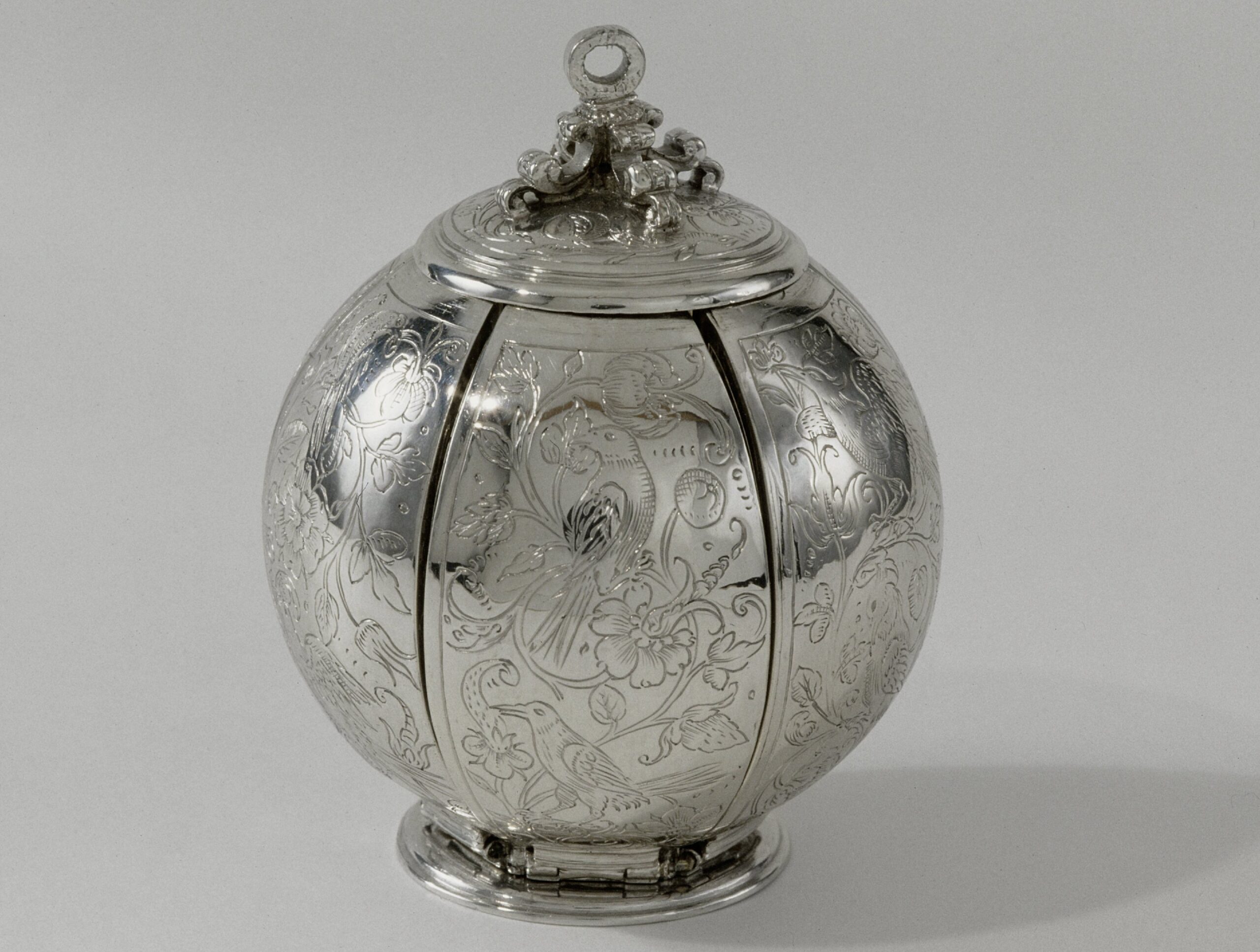
Pomander, anonymous, Silver, Netherlands, c. 1600 - c. 1625. From the collection of The Rijksmuseum Amsterdam.
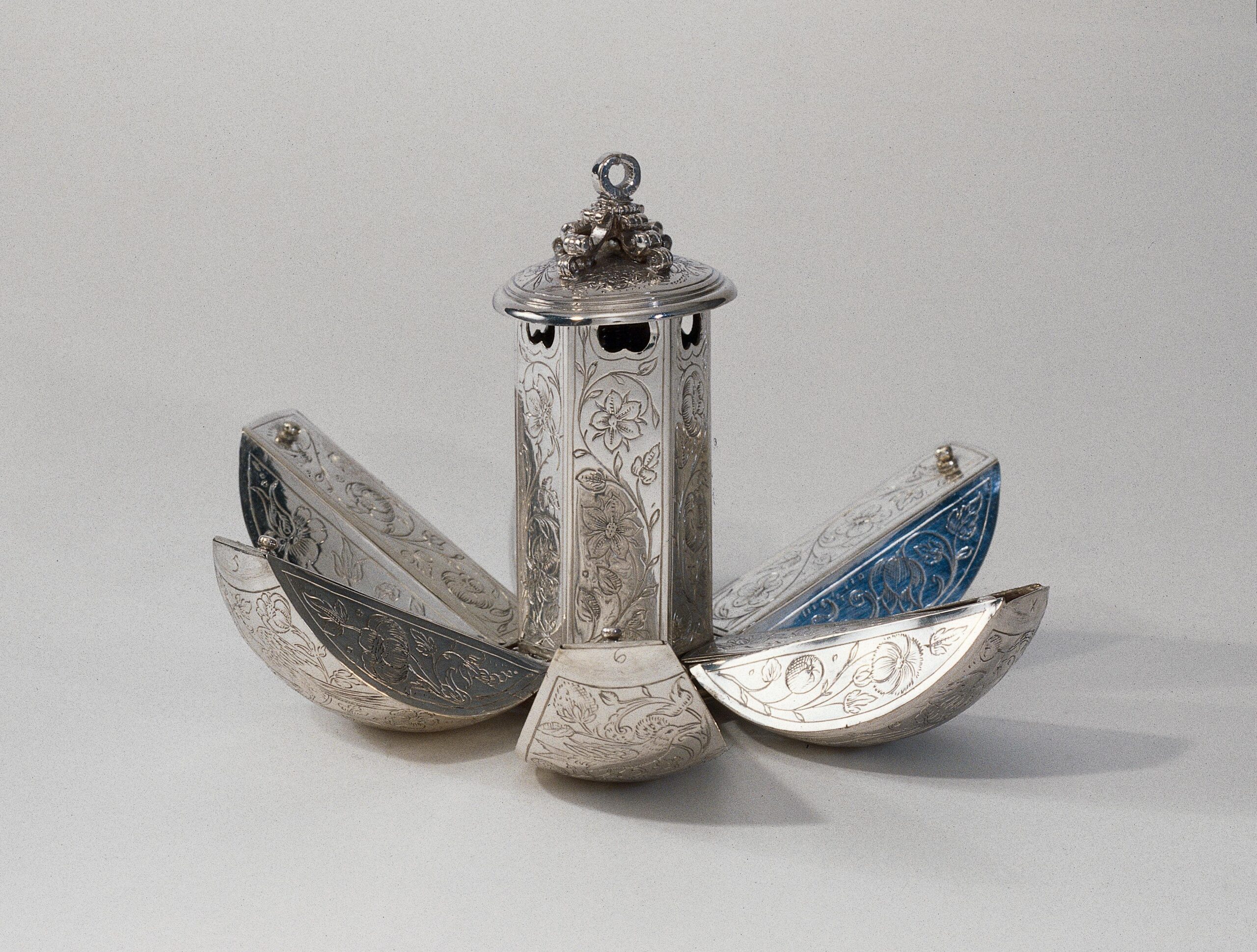
(Detail) Pomander, anonymous, Silver, Netherlands, c. 1600 - c. 1625. From the collection of The Rijksmuseum Amsterdam.
The Scent Trail Expands
Cinnamon also opens a much larger historical story.
In early modern Europe, aromatics from Arabia, India, Southeast Asia, and Ceylon, now Sri Lanka, were associated with wealth, distance, rarity, and imagined fragrant landscapes. European demand for cinnamon, cloves, nutmeg, and mace helped drive the expansion of colonial trading systems.
The Dutch East India Company established commercial networks and violent monopolies to control the production and movement of these materials. Communities were displaced, exploited, and subjected to colonial power in the pursuit of aromatics that were consumed in European kitchens, medicines, perfumes, and homes.
The cinnamon on your business card therefore carries more than one story. It can lead us from the kitchen to the body, from the pomander to the plague, and from European cities to histories of trade, colonialism, and exploitation.
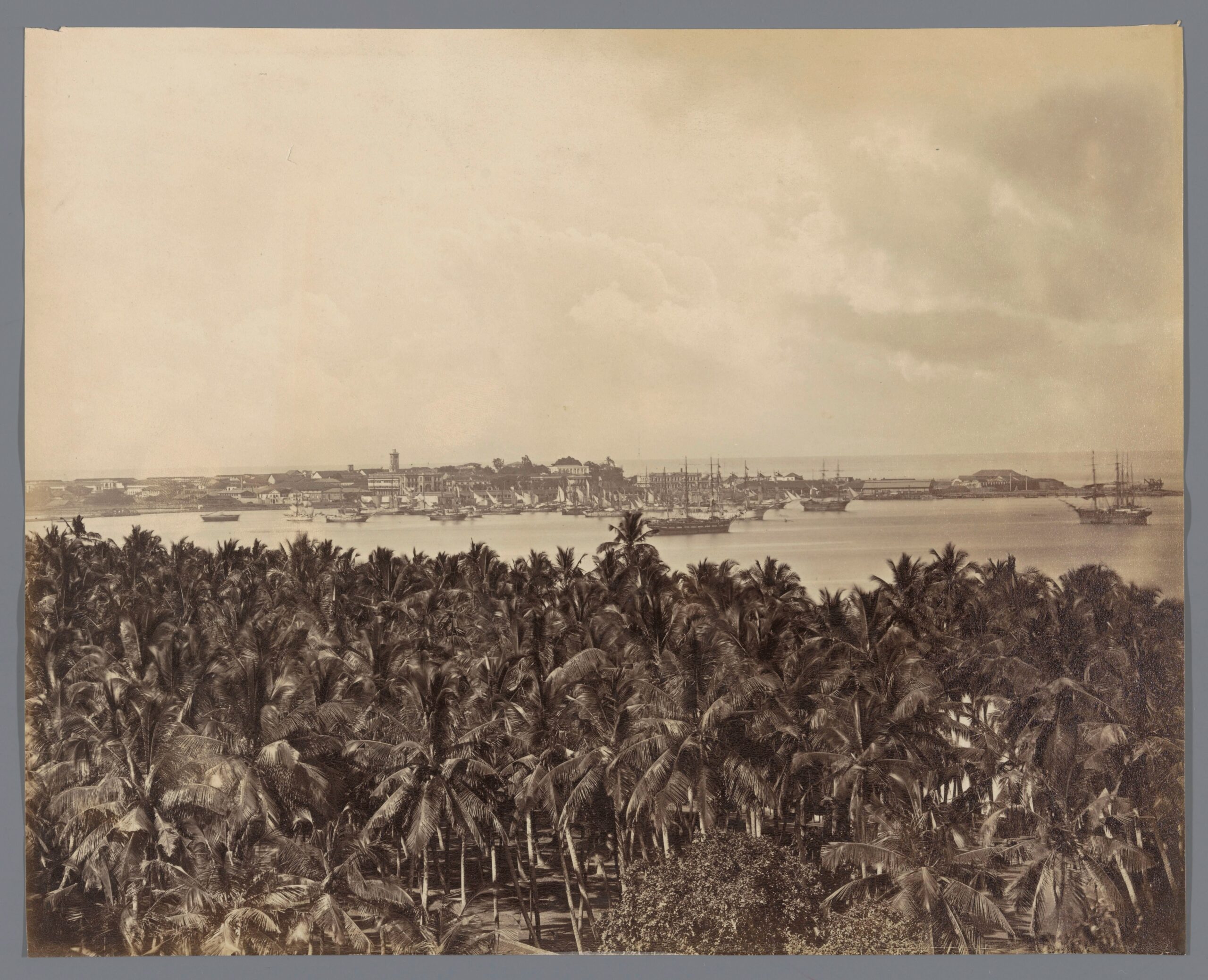
View of the City and Harbour of Colombo, from the St James Church Belfry, Sri Lanka, 1862 - 1903. From the collection of The Rijksmuseum Amsterdam.
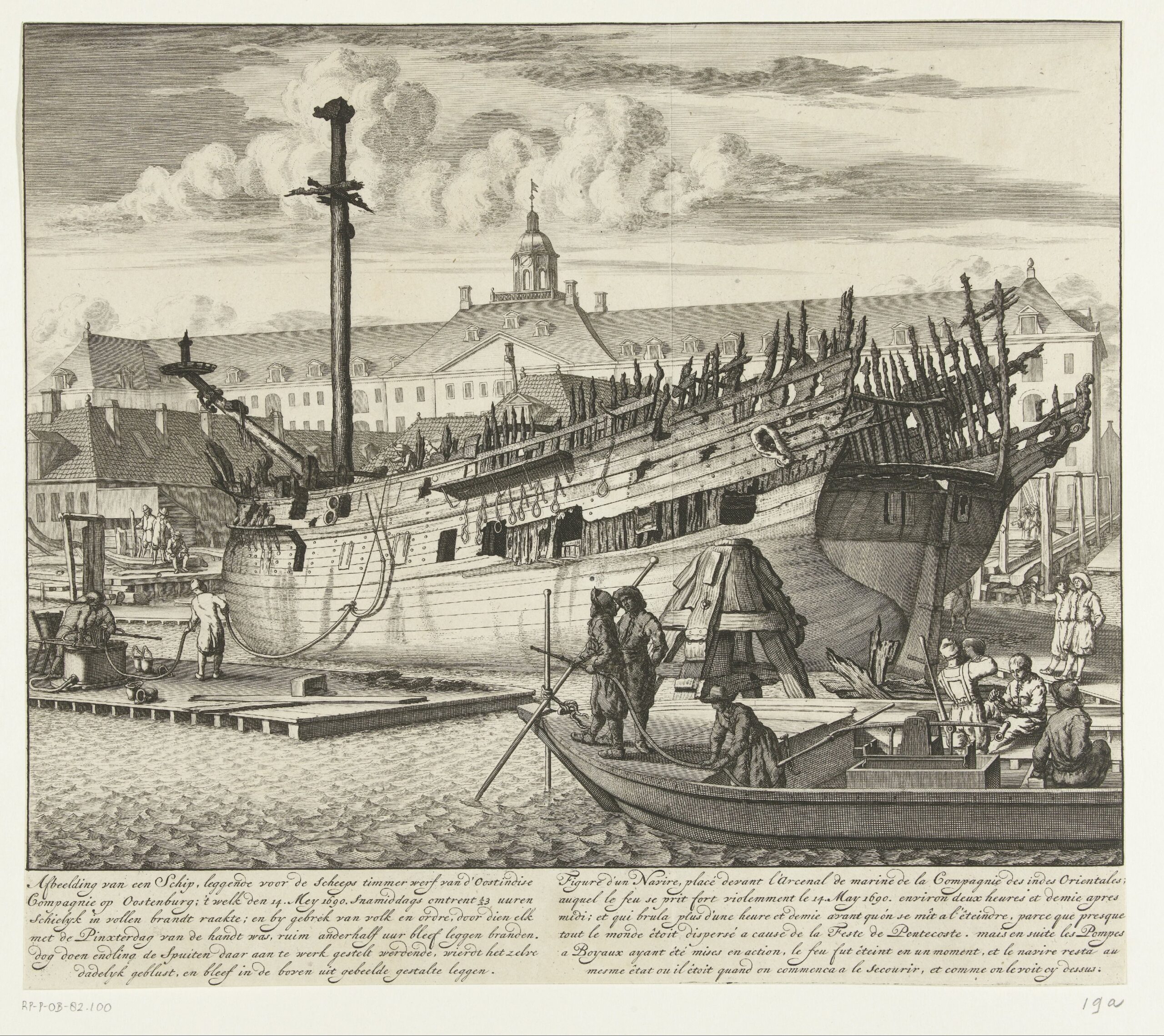
Partly burned ship at the VOC shipyard at Oostenburg, 1690
attributed to Jan van der Heyden, 1690 - 1735. From the collection of The Rijksmuseum Amsterdam.
Try This
After smelling the cinnamon, imagine encountering it:
- Inside a silver pomander worn during a disease outbreak
- In a seventeenth-century apothecary
- In an Amsterdam warehouse filled with imported spices
- On a ship carrying valuable aromatic materials
- In a place where cinnamon was grown, harvested, and controlled
Ask yourself:
How does the meaning of cinnamon change when its historical context changes?
A scent is never simply a scent. Its meaning is shaped by the people, places, practices, memories, and systems surrounding it.
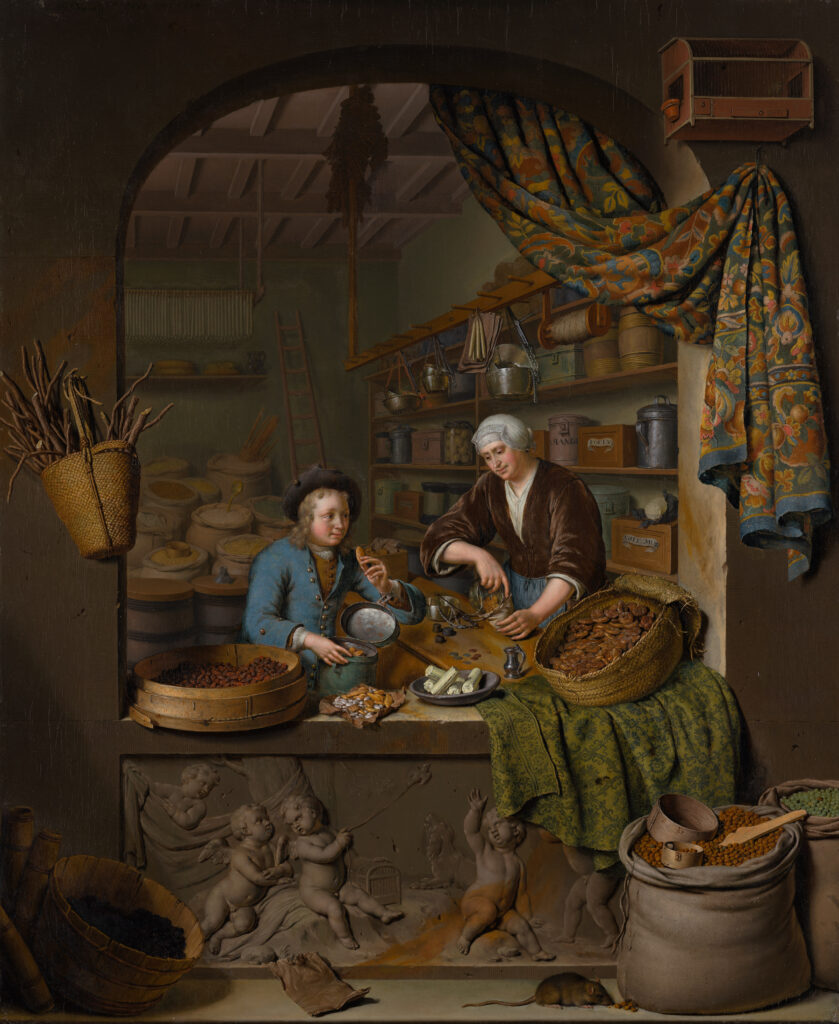
Willem van Mieris, A Grocer's Shop, Painting, 1717. From the collection of the Mauritshuis Museum, The Hague.
Where Smells Become Interpretation
The Olfactory Contractor helps museums, cultural institutions, researchers, educators, and creative teams use scent as a meaningful interpretive medium.
Founded by Sofia Collette Ehrich, the practice works at the intersection of olfactory heritage, olfactory museology, museum interpretation, research, and fragrance development.
Through consulting, education, and collaborative projects, The Olfactory Contractor helps institutions:
- Research culturally significant smells
- Translate historical research into scent concepts and perfumer briefs
- Develop responsible olfactory interpretation strategies
- Select appropriate scent delivery methods
- Consider accessibility, visitor agency, and audience comfort
- Integrate scent into exhibitions, programs, performances, and cultural experiences
The purpose is not simply to add fragrance. It is to use scent intentionally to uncover meaning, introduce new perspectives, and create additional pathways into culture and history.
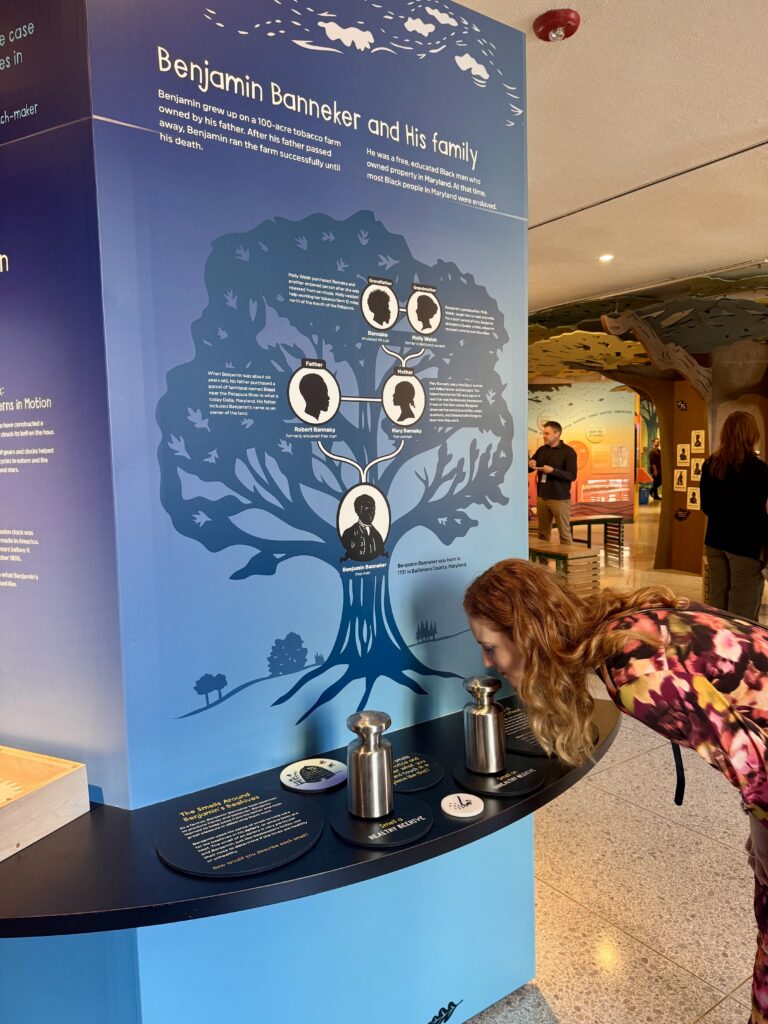
Sofia Collette Ehrich sniffing at the "WayFinders: Making Sense of Our World" exhibition at the Maryland Center for History and Culture - The Olfactory Contractor's first collaboration in March 2026.
Check Out The Olfactory Contractor
See the Work in Action
Join the Community