Notes from the Field: Smelling the Bouquet at the Stephen and Peter Sachs Museum
As more museums explore multisensory interpretation, scent is emerging as a powerful—yet still untypical—tool for storytelling. In this edition of Notes from the Field: How Museums Use Olfactory Storytelling, we feature the Stephen and Peter Sachs Museum at the Missouri Botanical Garden in St, Louis, Missouri and their exhibition Smelling the Bouquet: Plants & Scents in the Garden. This case study offers a clear and practical example of how a museum in a botanical garden can thoughtfully integrate scent to help visitors learn about the institution’s (living) collection .
A big thank you to the exhibition’s curator, Nezka Pfeifer, who generously shared her process, challenges, and reflections, allowing others to learn from her experience.
Are you working with scent at your cultural institution and want to be featured on my blog? I am happy to hear about your experience! Please reach out to me using my contact page.
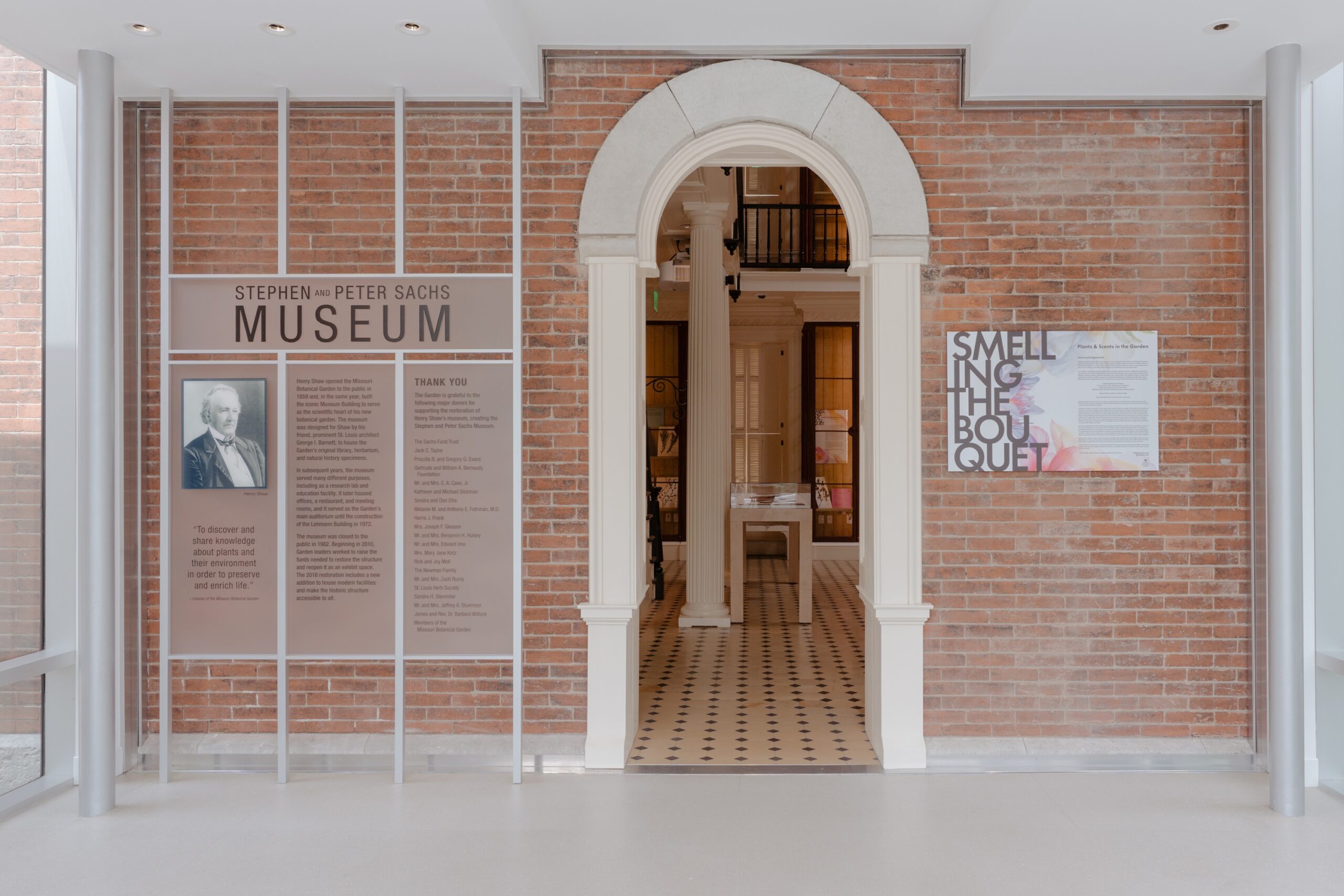
Museum main entry. Photo by Virginia Harold.
Smelling the Bouquet: Plants & Scents in the Garden Overview
Smelling the Bouquet: Plants & Scents in the Garden was curated at the Stephen and Peter Sachs Museum, located within the Missouri Botanical Garden, and is on view from May 2, 2025 to March 31, 2026. The exhibition features 34 unique scents that visitors can experience across three galleries.
The project was managed, developed and curated by the museum’s curator – Nezka Pfeifer – who also organized the accompanying performance and public program series that took place throughout the exhibition’s duration. Two independent artisan perfumers—Shawn Maher (Maher Olfactive) and Weston Adam (Phronema Perfumes)—were key collaborators in shaping and producing the olfactory content for both the exhibition and live programming. The exhibition also included a contribution from Olfactory artist Gayil Nalls, PhD who created a new version of “The World Sensorium” especially for the exhibition.
- Institution: Stephen and Peter Sachs Museum at the Missouri Botanical Garden
- Location: St, Louis, Missouri
- Project: Smelling the Bouquet: Plants & Scents in the Garden
- Duration: 11 months
- Number of Scents: 34
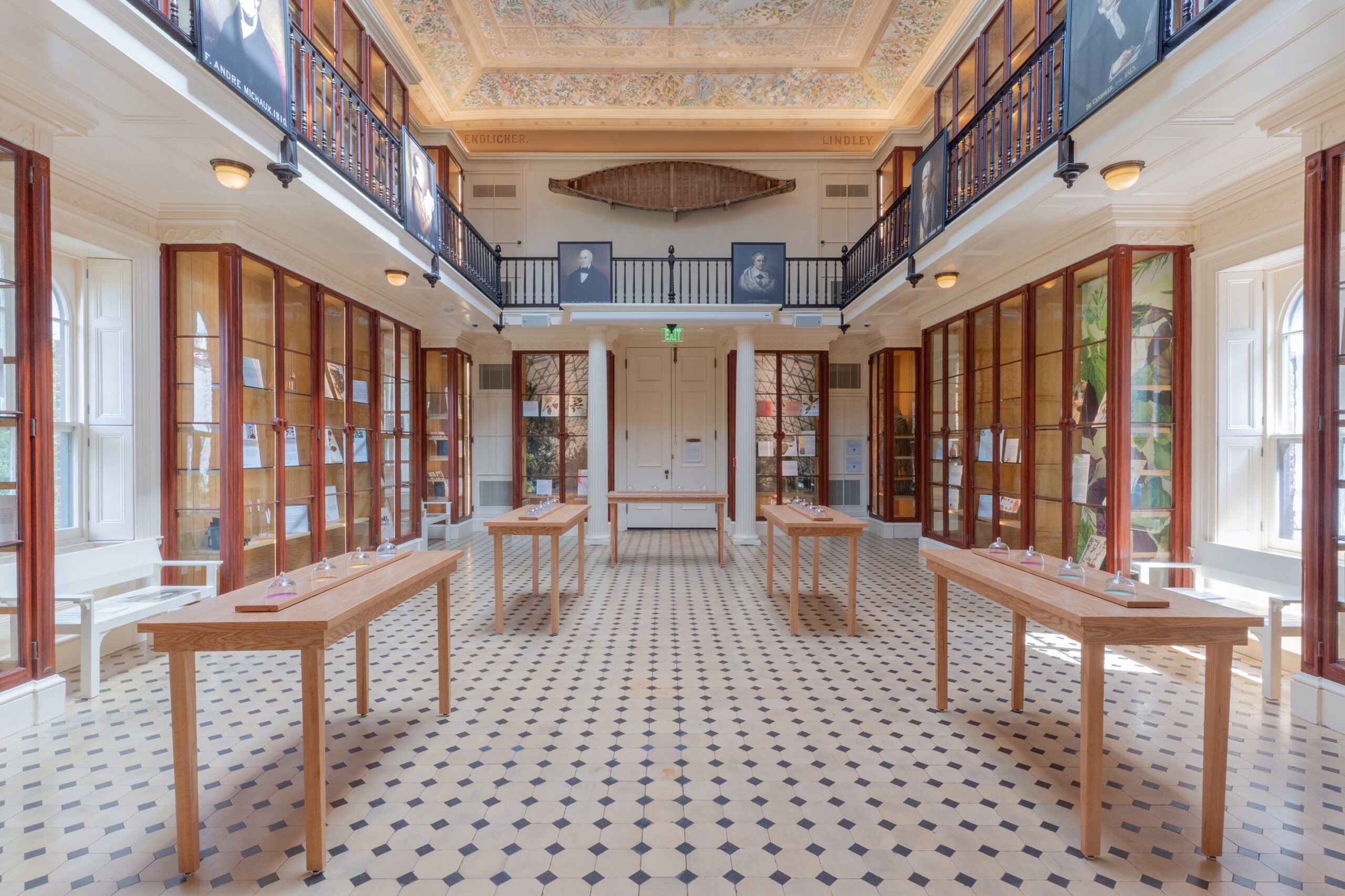
View of the main gallery. Photo by Virginia Harold.
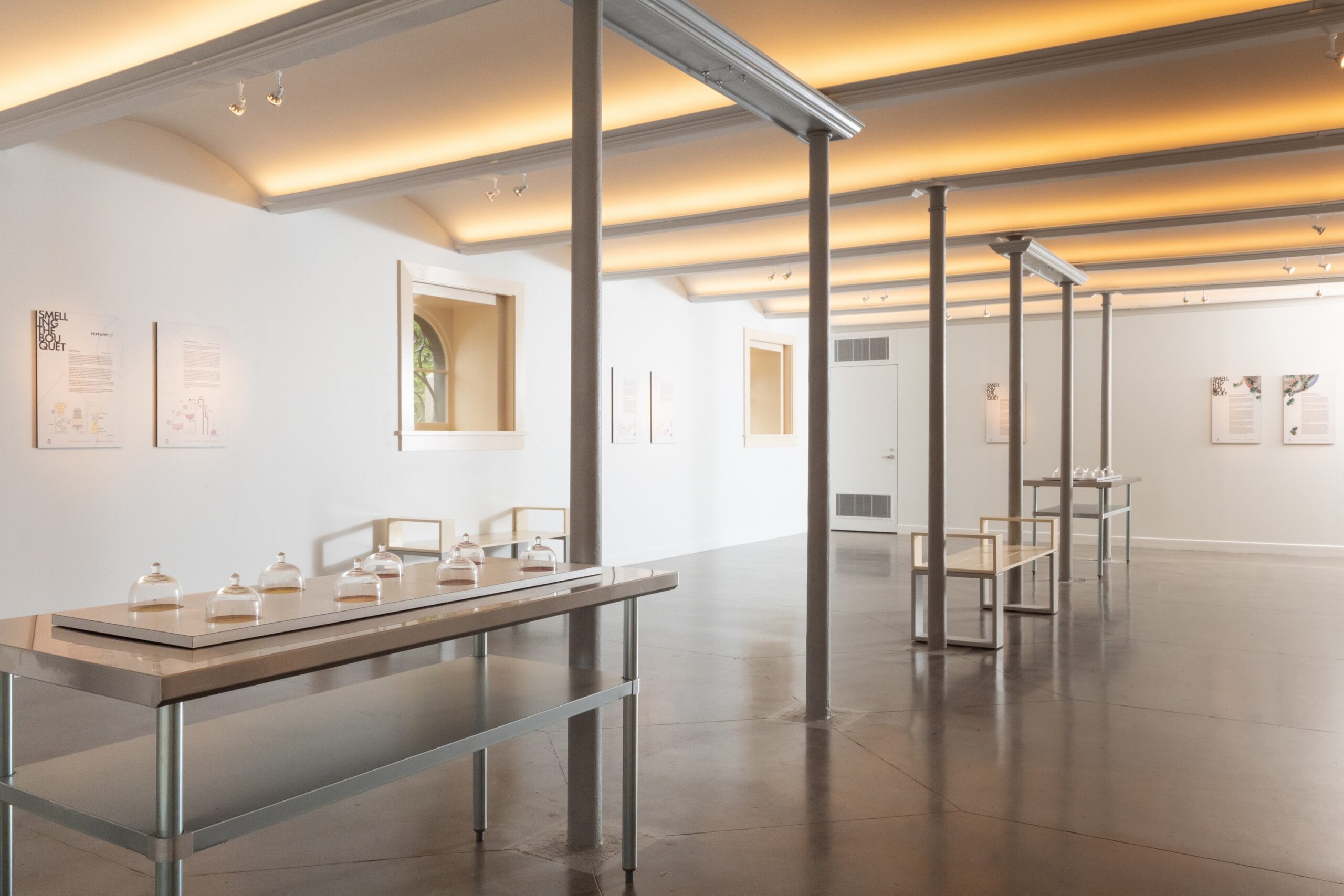
View of lower gallery. Photo by Virginia Harold.
Why Scent?
Focusing an entire exhibition and accompanying performance and program series on plants and their scents was completely aligned with the Garden’s mission to preserve, protect, and educate the public on plants. The Garden scientists actively study aromatic compounds and their relationships to pollinators, making scent a meaningful bridge between the Garden’s research, collections, and public interpretation.
At the same time, the exhibition was intentionally designed to resonate with a broad public audience. Sensory-based exhibitions—particularly those focused on smell—are increasingly demonstrating their ability to engage visitors deeply and personally.
The curator also framed scent as a way to foreground how deeply humans depend on plants. Plants account for much of what people eat, drink, wear, and build with—and scent touches all of those relationships. In this context, olfactory storytelling became a powerful interpretive tool to highlight how often plants are overlooked, despite shaping nearly every aspect of daily life.
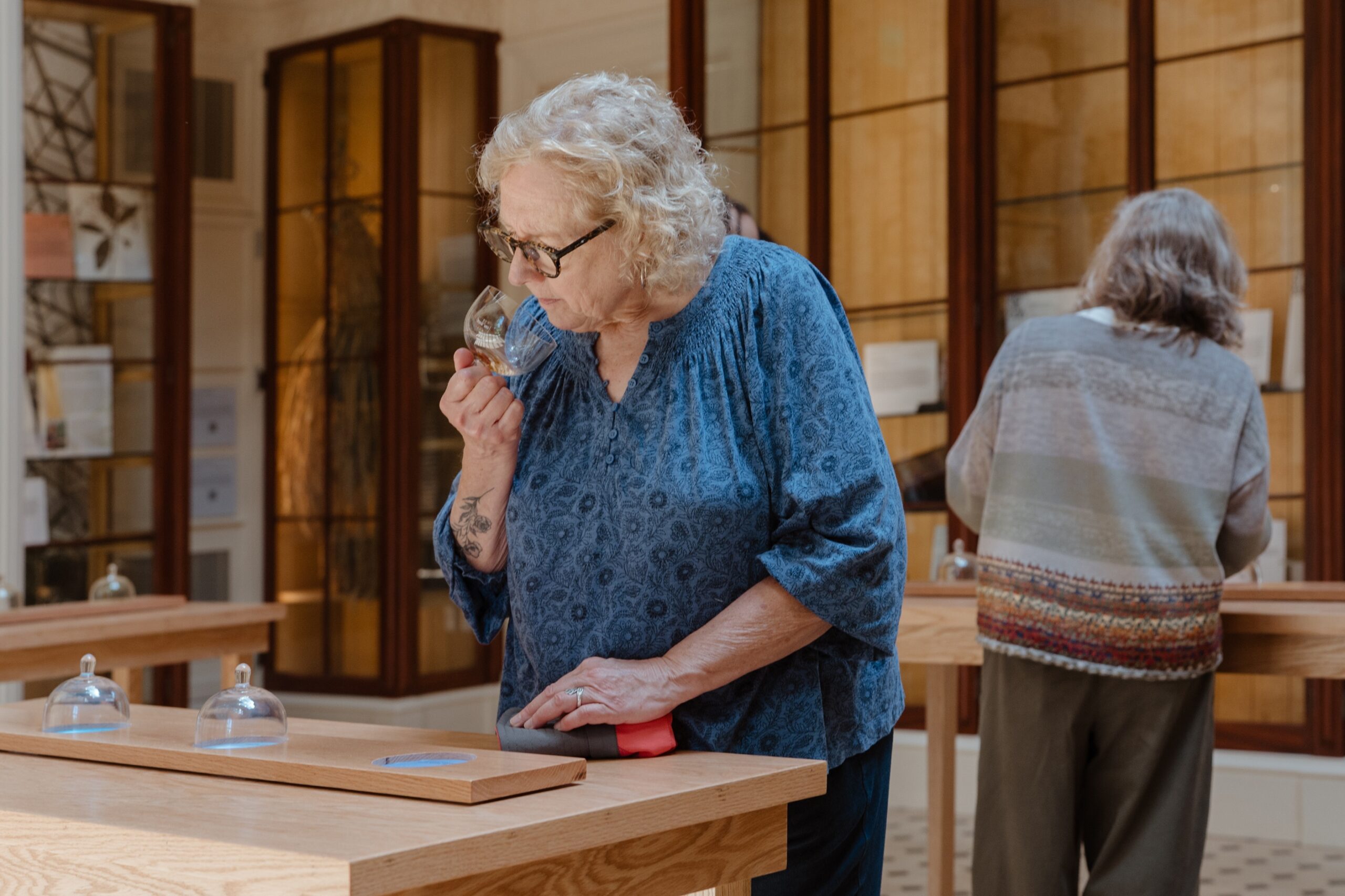
Sniffer in the gallery. Photo by Virginia Harold.
Identifying the Olfactory Narrative
The narrative was rather simple: an exploration of the spectrum of smells that plants create and the ways that humans have been harnessing those scents for millennia, including perfume, incense, and other cultural scent practices. It was also important to offer plant scents that were more unknown to the public, broadening the discussion beyond those of the everyday.
Pfeifer aimed to develop a selection of scents that balanced iconic perfume plants, lesser-known aromatic species, and unique live plants growing within the Garden’s own collections. The perfumers on the project, Shawn Maher and Weston Adam were involved early on to help shape this narrative and played a central role in determining which scents could best support the exhibition’s interpretive goals.
Led by the curator, the overall conceptual and curatorial narrative development was a collaborative effort bringing together the perfumers, contributing multisensory artists, Garden botanists in St. Louis and Madagascar, and a wide network of community collaborators and artists who contributed to the exhibition’s related performances and programming.
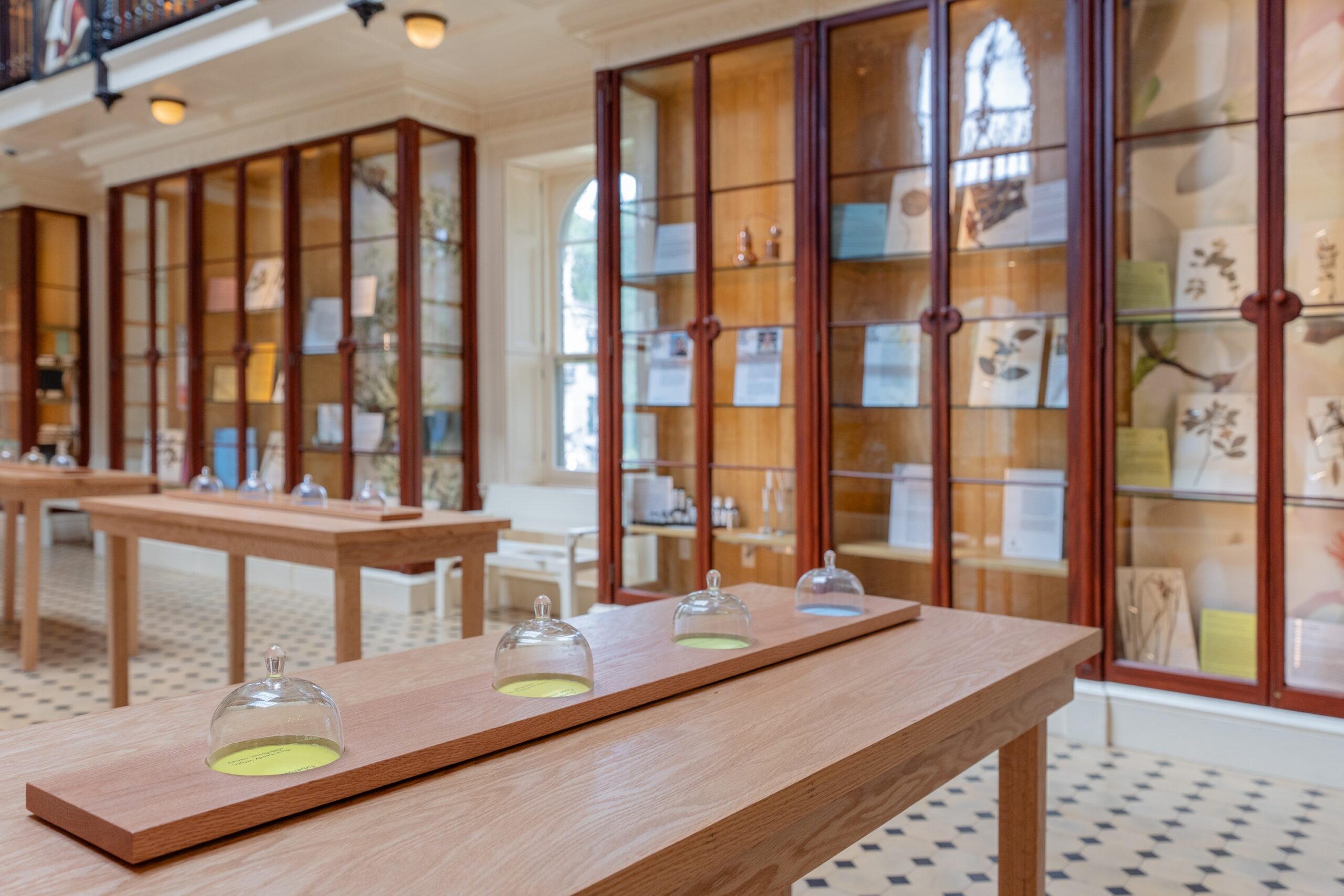
View of the “White Flowers” display cabinet (far right) with the White Flower scent table showing glass cloches to sniff. Photo by Virginia Harold.
Sourcing Scents & Maintaining Accuracy
Smelling the Bouquet: Plants & Scents in the Garden emphasizes contemporary scientific understanding and the living plant collections of the Missouri Botanical Garden. The perfumers were focused on recreating the scents of the plants highlighted in the exhibition as accurately as possible.
Long-term collaboration and discussion refining ideas, narratives, and technical approaches with the perfumers was key. The perfumers were also invited for repeated after-hours “sniffing sessions” throughout the Garden and conservatories. Walks around the Garden allowed the perfumers to experience blooming plants directly and to identify which live specimens could be translated into scent experiences for visitors.
The scents in the exhibition range from:
- perfume materials derived directly from plants (such as absolutes and essential oils);
- “interpretive fragrances” crafted by perfumers that were inspired by live plants growing in the Garden’s collections; and
- individual aromatic compounds found in botanical scents.
So that we can better understand how these scent categories played a role in the exhibition’s narrativity, Pfeifer shared examples of the didactics (descriptions) that were shared with the scents in the exhibitions.
Perfume Materials
Iris—orris root—the blue gold of perfumery
“Iris comprises over 300 species across the northern hemisphere, and is an herbaceous rhizome-producing perennial plant with a subterranean stem, long, slender leaves, and colorful, bearded flowers. The genus name comes via Latin from Greek iris ‘rainbow, iris (eye)’, also after the Greek goddess of the rainbow, a reference to the flower color. The specific epithet, pallida, means pale, germanica means of Germany and florentina means of Florence.
The iris rhizome is the source of orris root, which is cultivated and aged for years before use in perfumery. Orris is often likened to the scent of violet flowers and was once known as violet-rose. The sweet, earthy, woody quality comes from triterpenoid breakdown into irones, which are close in structure and aroma to violet ionones, and responsible for the characteristic scent of the dried, aged root. The older the rhizomes of this underground aromatic, the more pungent the scent. Orris can range from powdery, and violet-like, to woody, green, with waxy tones, and a touch of fruit, cocoa, or leather. Orris butter takes on a slightly more earthy note, whereas the absolute is the most powdery and longest lasting. The name and the scent of orris are synonymous with luxury, and the high cost drives its use in minute quantities in perfumery, further contributing to its rare appeal.”
Interpretive Fragrance Examples
BluBop water lily & Campanita
Pfeifer shared two of the interpretive fragrance descriptions together with the museum didactics. Keep reading to better understand one fragrance developed by perfumer Shawn Mahler and one by perfumer Weston Adam
Shawn Mahler’s BluBop water lily
“Nymphaea caerulea, commonly known as sacred blue lily of the Nile and blue water lily among other names, is a diurnal water lily native to tropical Africa. Considered endangered by the IUCN Red List of Threatened Species in its original habitat, it occurs in still water and drying mud in seasonal ponds, papyrus swamps, dams, slow-flowing streams and rivers, and along lake edges. The aquatic perennial features large, fragrant, star-like flowers in a range of colors including blue, white, mauve, and pink, with blue being the most common. It has round-oval, flat leaves that arise from submerged rhizomes and float on the water’s surface.
Sweetly and delicately fragrant, blue water lily smells waxy and almond-or-fig-like, with green floral notes. The scent is equal in intensity throughout the short 3-day blooming cycle, though not as fragrant as compared to night-blooming water lily species—which are considered very intense. The water lily it is not used extensively in perfumery but in cosmetics as it contains anti-inflammatory compounds.
Perfumer Shawn Maher interpreted the unique scent of Nymphaea ‘BluBop’ a blue-petaled water lily previously on display in the Garden pools and captured its fruity notes of passion fruit, pineapple, and jasmine.”
Weston Adam’s Campanita
“Endemic to the Dominican Republic (which is how it gets its species name), Cubanola dominguensis is a small shrub or tree that is known for its elegant hanging trumpet-shaped pale greenish-white blossoms. Likely pollinated at night by bats or long-tongued moths, these flowers are fragrant in the evening with notes of creamy, dry, powder and includes chocolate and pepper. The leaves, when crushed, also have an odor, but less pleasant and more reminiscent of skunk and petrol (gas). This plant grows in the Garden’s Climatron® and is one of the plants scent trapped by Dr. Carlsen and interpreted in fragrance by perfumer Weston Adam for you to sniff in this gallery. Can you pick up on the sweet, green, creamy, chocolatey (with a hint of jasmine) notes?
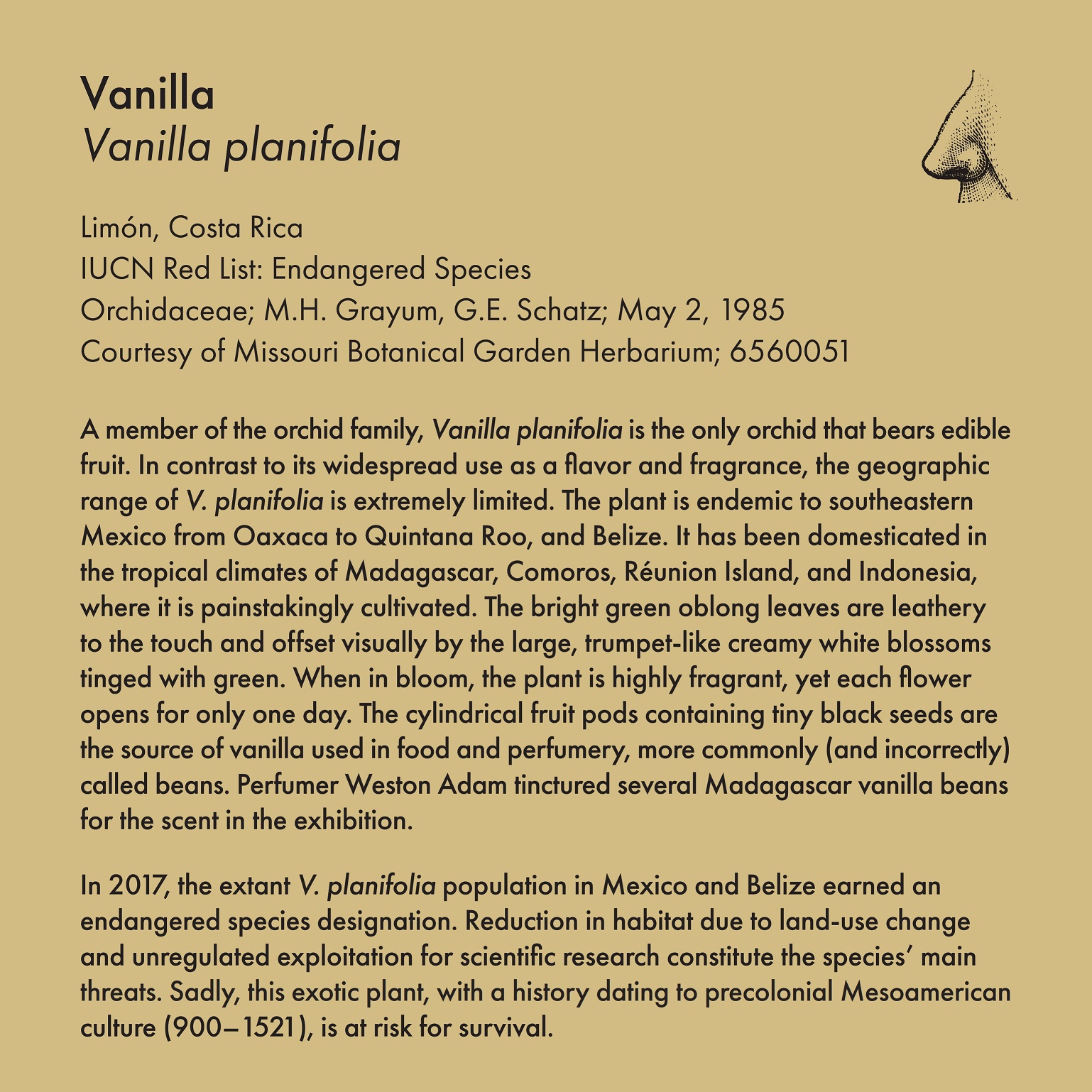
Didactics for individual aromatic compound “Vanilla.”
Individual Aromatic Compounds
Pfeifer shared the didactics and design of how individual aromatic compounds were displayed.
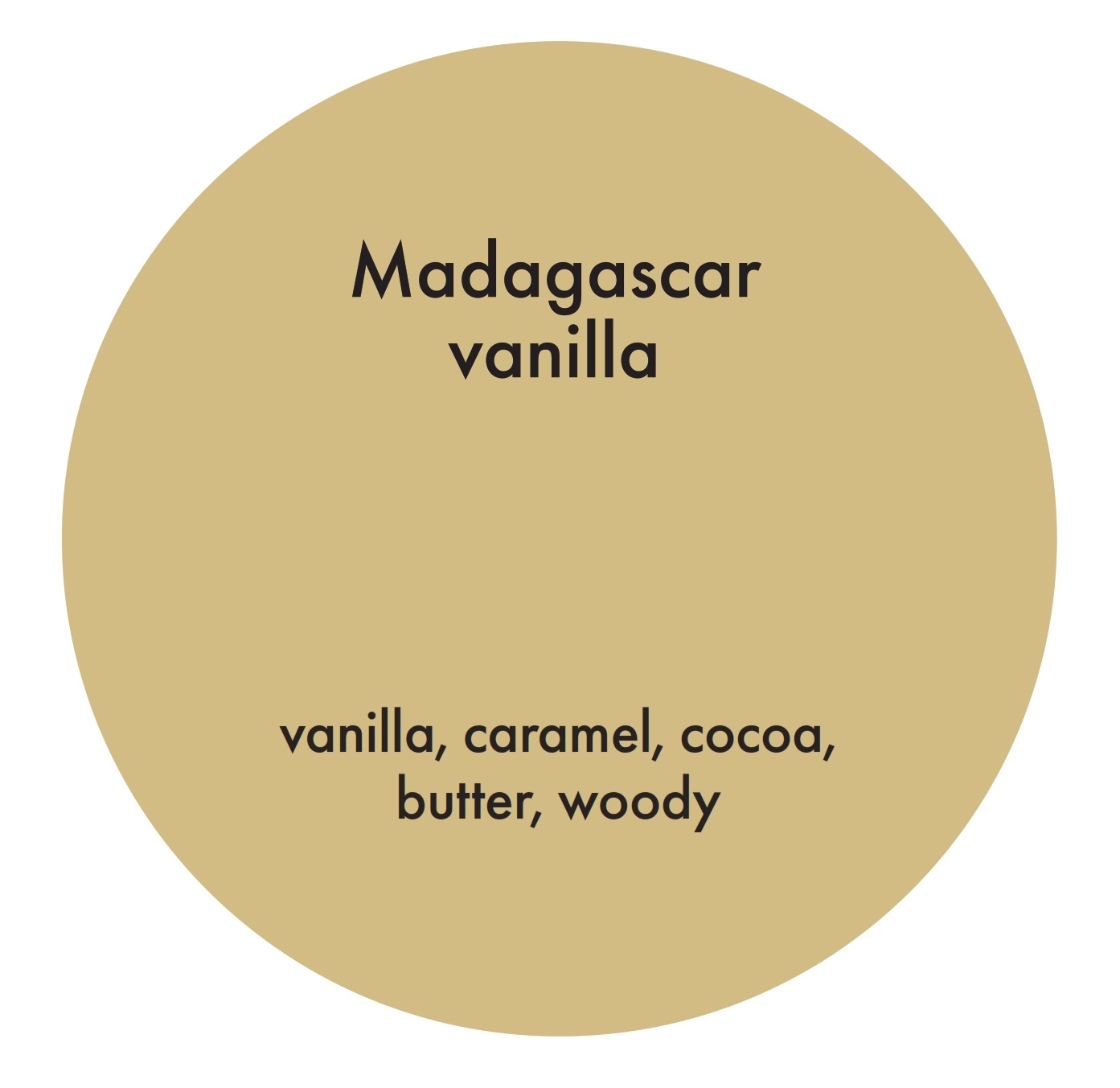
Cloche description for individual aromatic compound “Vanilla.”
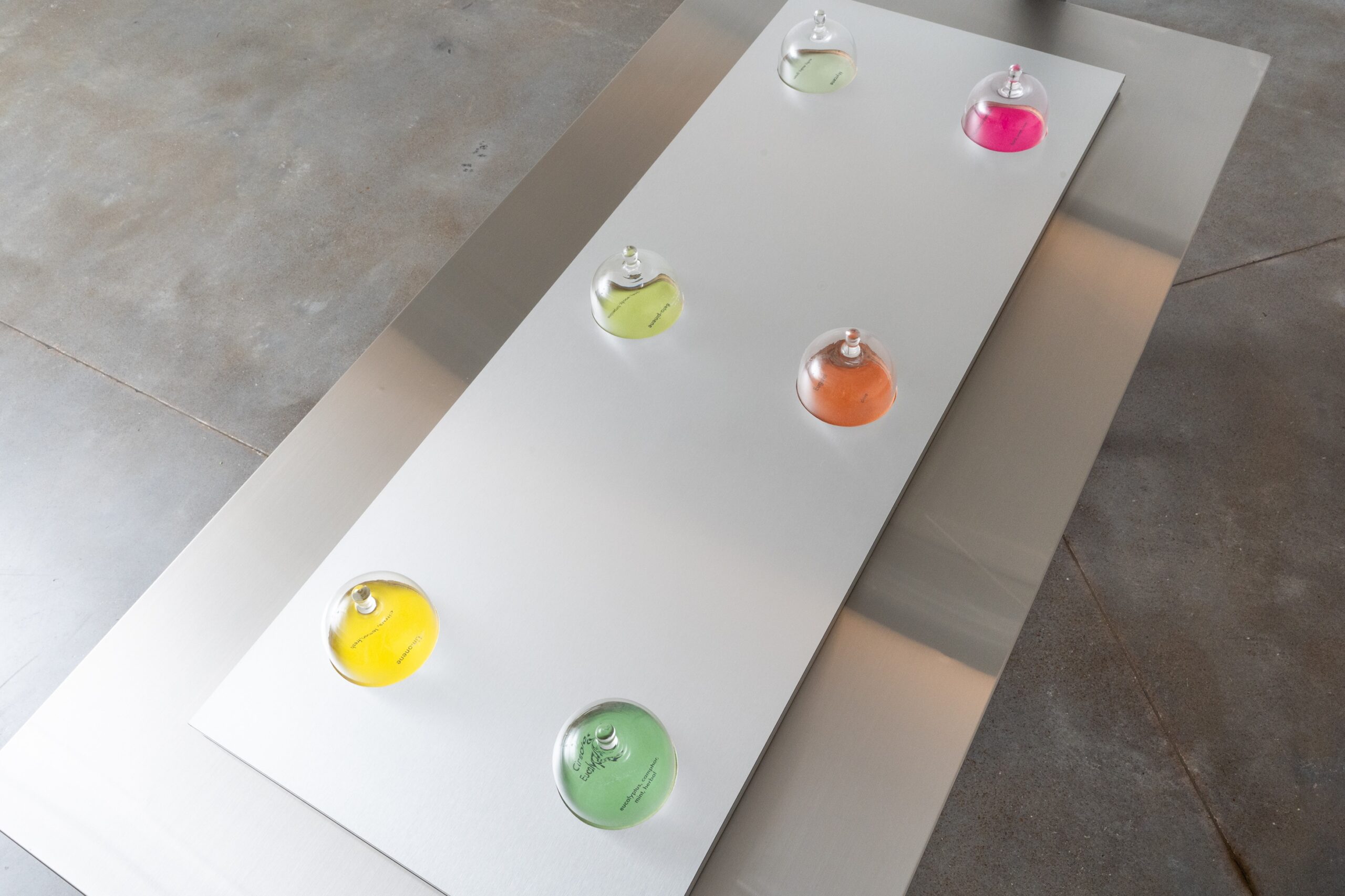
Example of the scent distribution design: glass cloches with scent descriptions placed on the table. Photo by Virginia Harold.
Scent Distribution Design
The exhibition presents 34 scents across three galleries, using small, clear, handled glass cloches as the primary scent delivery system, with short didactic labels showing the scent name and brief description placed directly on the “cloche circles,” and longer, more descriptive interpretive labels positioned alongside each scent. Each fragrance is applied directly to the inside of the cloche dome and refreshed approximately twice per week, with the cloches set into custom-routed tabletops that integrate the labeling and create a single, clear interaction point for visitors. Because the same scent delivery and labeling system is used consistently throughout all three galleries, the cloche format was easy for visitors to understand and intuitive to use.
This design was ideal for several reasons:
- Visitors retain agency over whether or not they choose to engage with and sniff each scent;
- Fragrances are not aerosolized into the gallery space, allowing for greater control and minimizing unwanted exposure;
- Scent control is achieved naturally through the enclosure of each cloche, and—aside from a short period immediately following reapplication—scents do not linger in the galleries;
- The system is low-tech, affordable, and easy to maintain over a long exhibition period; and
- The cloche format is already familiar to many visitors through its use in perfume and candle shops.
While some institutions initially expressed concern about using breakable glass, the team found the approach worked well in practice. Only a small number of cloches were broken or chipped over time, and replacements were anticipated and prepared in advance, making the system both resilient and adaptable.
Each station also includes clear signage:
- a plant label accompanied by an herbarium specimen, and;
- a color-coded label beneath the cloche that identifies the smell and provides fragrance notes to help visitors understand the featured scent’s complexity.
Maintaining the distribution system was also straightforward. Since the exhibition relies on low-tech tools, scents were reapplied two times a week. Most of the fragrances are produced in ethanol, allowing the curatorial team to easily refresh each cloche using cotton swabs or spraying. Some scents – like the World Sensorium created by Gayil Nalls, PhD – were in oil form and applied in the same way.
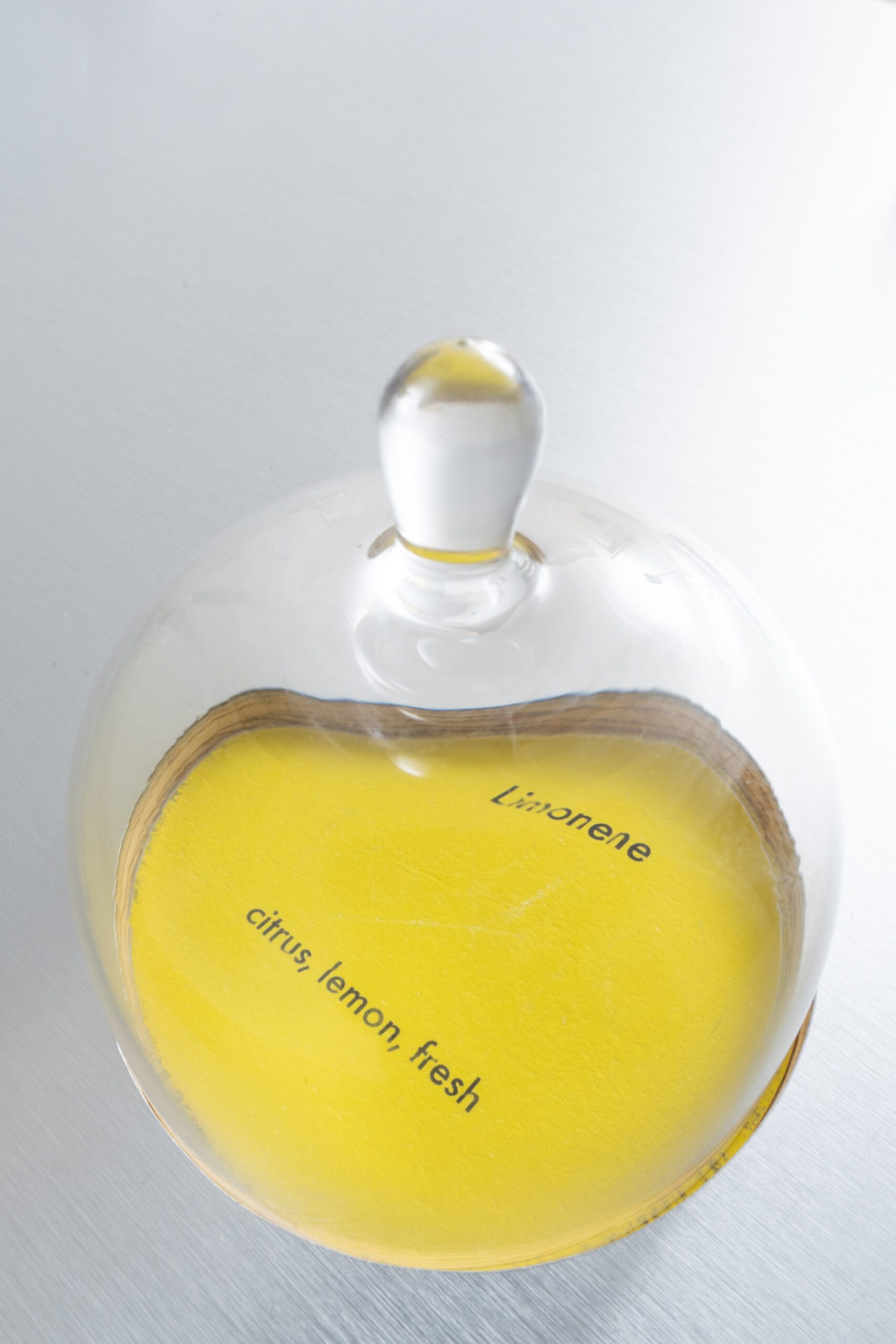
Close up of cloche for sniffing. Photo by Virginia Harold.
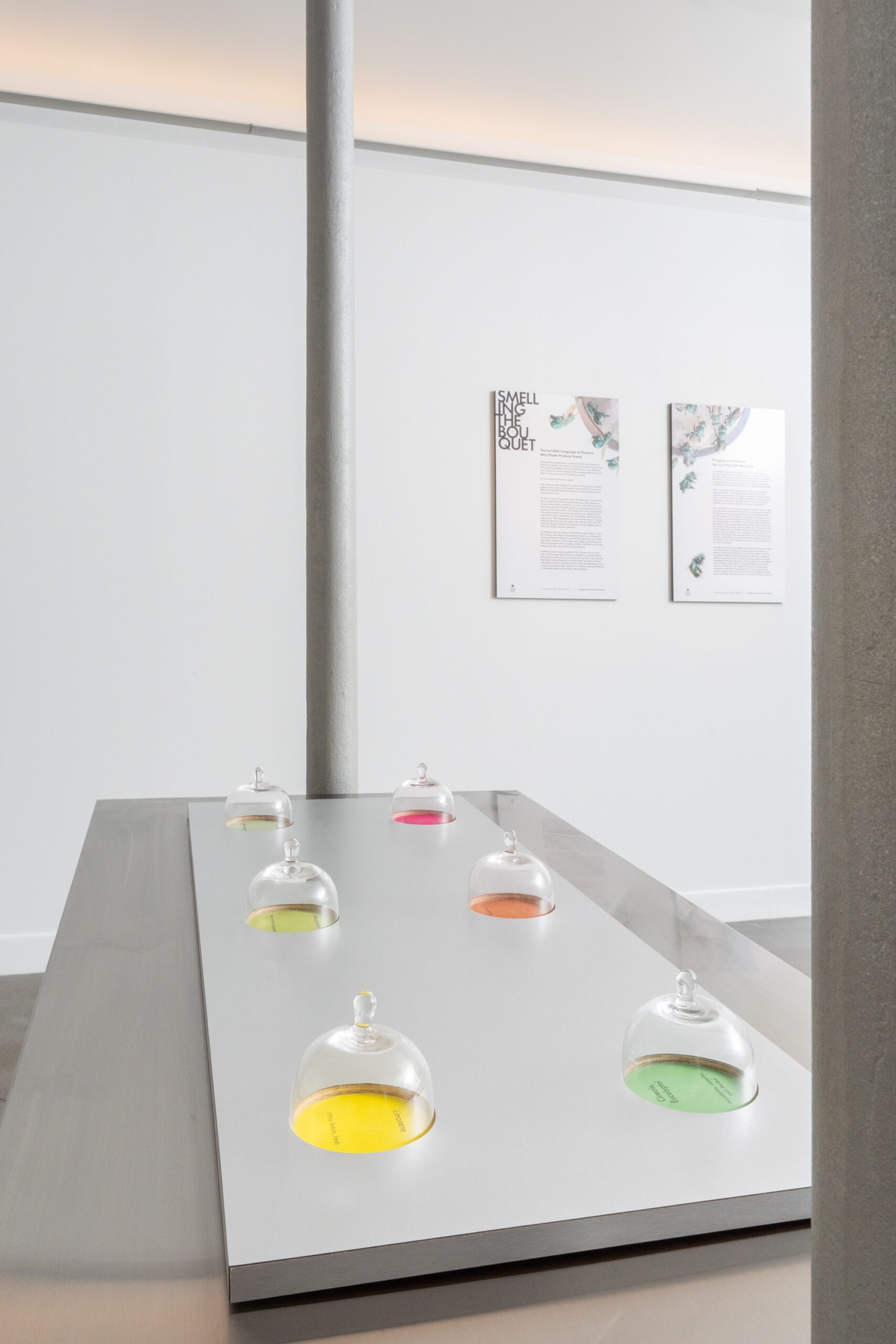
Table with cloches for sniffing. Photo by Virginia Harold.
Visitor Experience & Accessibility
Visitor response to the olfactory elements has been overwhelmingly positive. Across the board, visitors of all ages and backgrounds loved the olfactory interactivity; even if they didn’t read the labels and look at the other elements in the exhibition, they explored all of the scents in all three galleries.
From staff observation and anecdotal feedback, scent clearly supported deeper engagement and conversation. Visitors frequently shared personal memories connected to familiar plant scents and expressed excitement about encountering those that they had never experienced before.
For visitors with scent sensitivities or other concerns, the scent distribution design ensured that participation was entirely optional. The choice to lift the cloche was left entirely up to the visitor, giving them control over their sensory exposure.
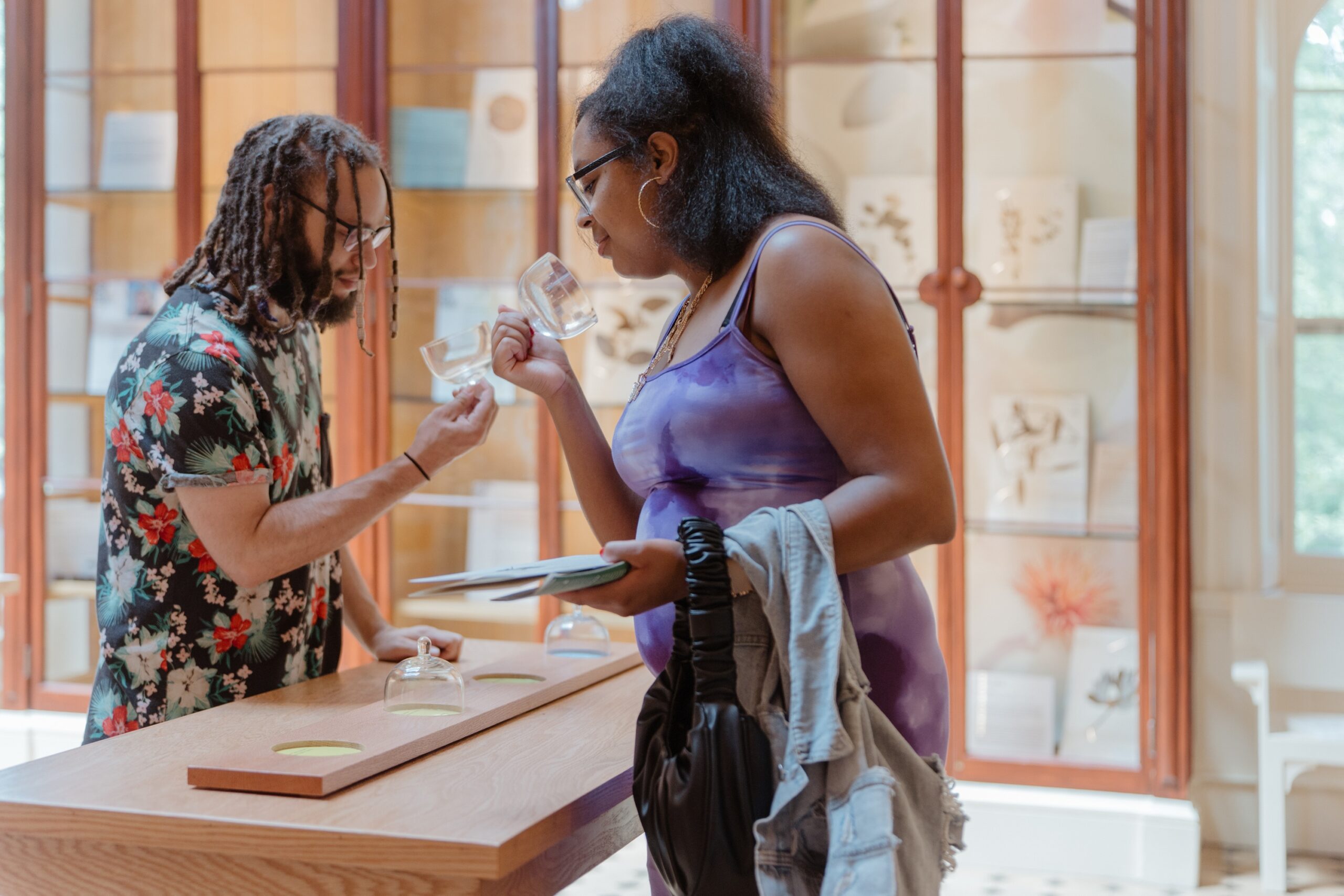
Visitors sniffing. Photo by Virginia Harold.
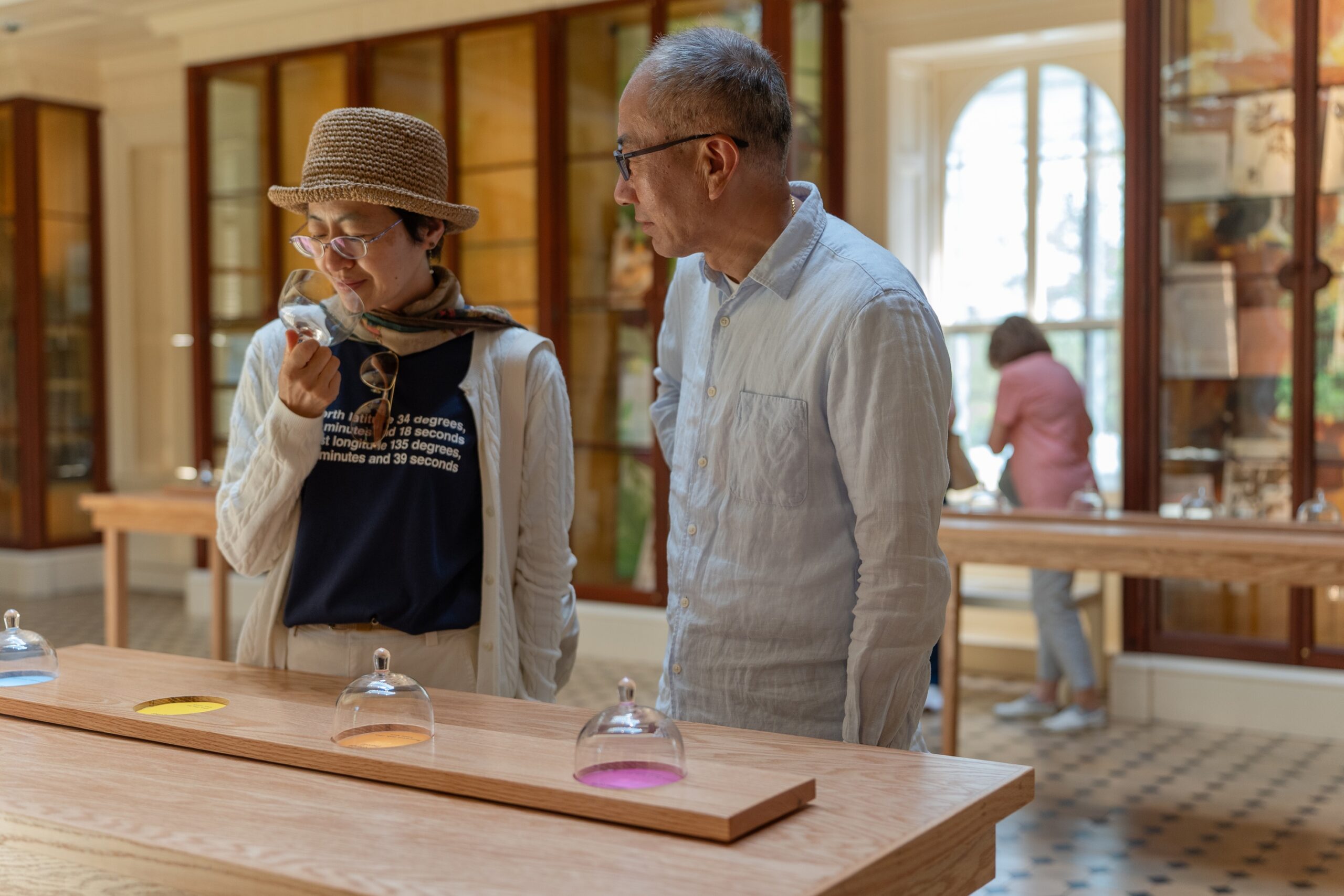
Visitors sniffing. Photo by Virginia Harold.
Challenges & Lessons Learned
Pfeifer shared three main challenges that shaped the project’s development:
- Determining which narratives—both iconic and unusual—should be included;
- Finding the right scents and perfumers to source/produce them; and
- Selecting an effective scent delivery method.
She shared that she was very lucky to find local perfumers to support the scent development, but figuring out a scent delivery method required years of research, testing, and reflection. A key lesson emphasized by Pfeifer was the importance of clearly defining the olfactory narrative early on. Once the interpretive message is established, decisions about perfumers, materials, and scent delivery become far easier and more coherent.
When asked what she wishes others knew about olfactory storytelling, she said: “That it is not only about the technical process of working with scents and scent makers, but also about recognizing how much visitors themselves bring to the experience. Smell is deeply connected to personal memory and lived experience, it naturally invites conversation—making olfactory projects especially rich, participatory, and memorable for everyone involved.”
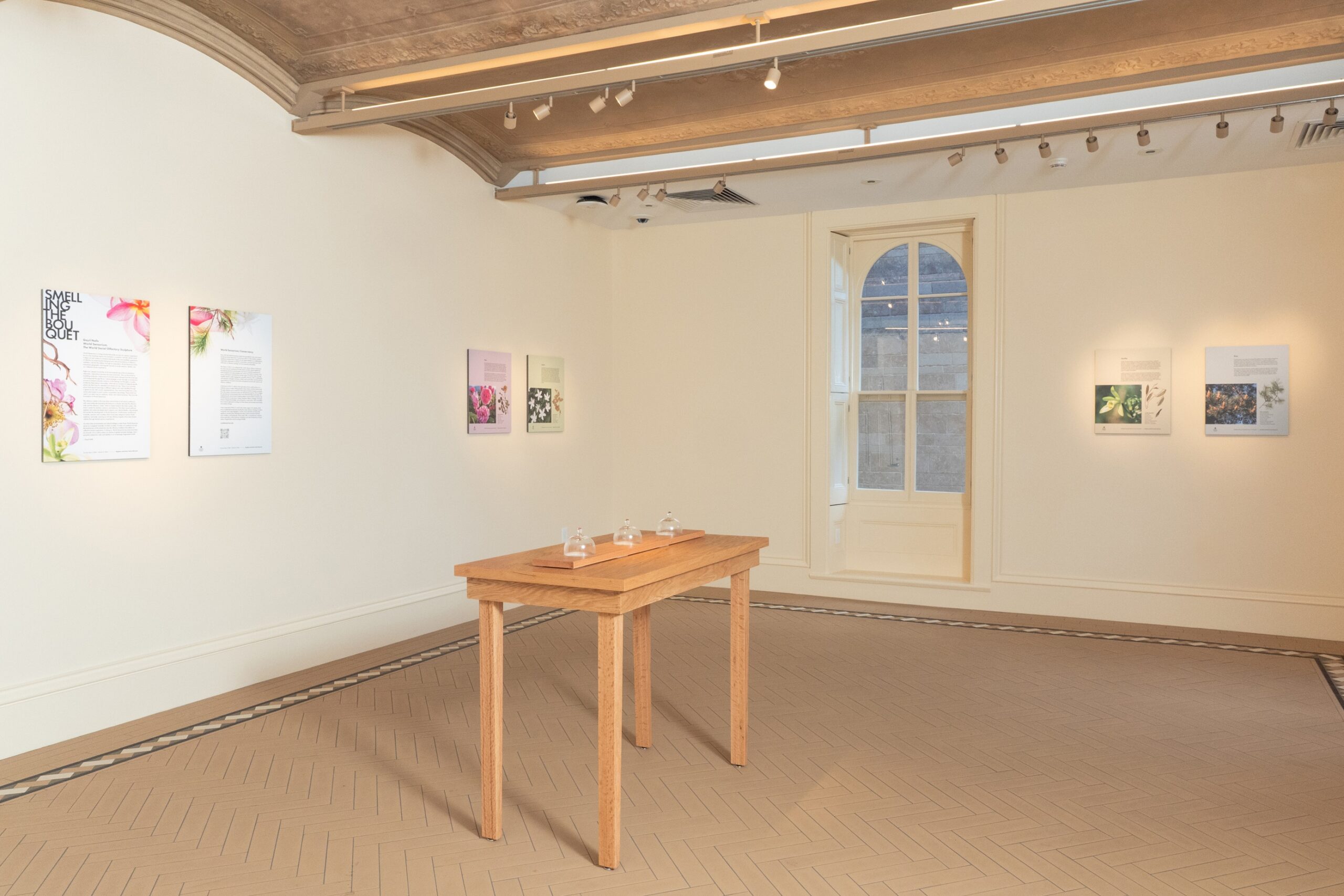
Gallery of the “World Sensorium” by Gayil Nalls, PhD. Photo by Virginia Harold.
Final Reflections
Smelling the Bouquet: Plants & Scents in the Garden at the Stephen and Peter Sachs Museum demonstrates how olfactory storytelling can operate meaningfully within a botanical garden museum context. With 34 scents presented across the exhibition, the project represents an ambitious and carefully executed approach to scent-based interpretation. Pfeifer and her interdisciplinary collaborators ensured that the exhibition remained grounded in clear narrative development, thoughtful curatorial decision-making, and practical design strategies.
For Pfeifer, successful olfactory museology is not simply about adding scent to a gallery. It depends on long-term collaboration with perfumers and subject experts, a willingness to experiment, and the careful design of visitor experiences that respect both sensory diversity and interpretive depth.
Looking ahead, she is confident that scent will continue to play a role in her future exhibitions and programs. She also sees growing potential for olfactory storytelling across museums as embodied experiences and knowledge continues to shape how visitors engage with cultural heritage. At the Stephen and Peter Sachs Museum, the exhibition has already influenced both curatorial practice and scientific work, inspiring staff to consider scent within other research and design projects.
Above all, Pfeifer emphasizes that the most lasting impact of this project has been the relationships she has built over the nearly five years of developing this exhibition—relationships that now form the foundation for future, and perhaps unexpected, collaborations.
Make sure to check out the exhibition’s newly released catalogue and Pfeifer’s recent appearance on St. Louis Public Radio.
Interested in Learning More?
Interested in learning more? Make sure to check out my blog post on Recommended Smell Culture Resources to dive deeper into the world of olfactory museology and become familiar with more trailblazers of this field.
I regularly teach courses about Olfactory Storytelling and Olfactory Museology with the Fragrance Alliance Network. Make sure to stay up to date with when I am teaching next or where my projects will be exhibited by joining my mailing list here.
Is your museum working with scent? I would love to feature your story! Reach out to me through my contact page here.