Olfactory Distribution Design: From Interpretive Intent to Visitor Experience
When people think about scent in the museum, they often focus on the smell itself. What it is, where it comes from and what it means. But there is an entire layer of practice that sits between choosing a scent and a visitor actually experiencing it. This is what I call olfactory distribution design.
Olfactory distribution design is the part of olfactory museology concerned with execution. This is how the scent is physically delivered, experienced, and framed within the exhibition space. It is not a technical afterthought. It is a design discipline in its own right, and getting it wrong can negatively impact even the most carefully researched interpretive olfactory storytelling projects.
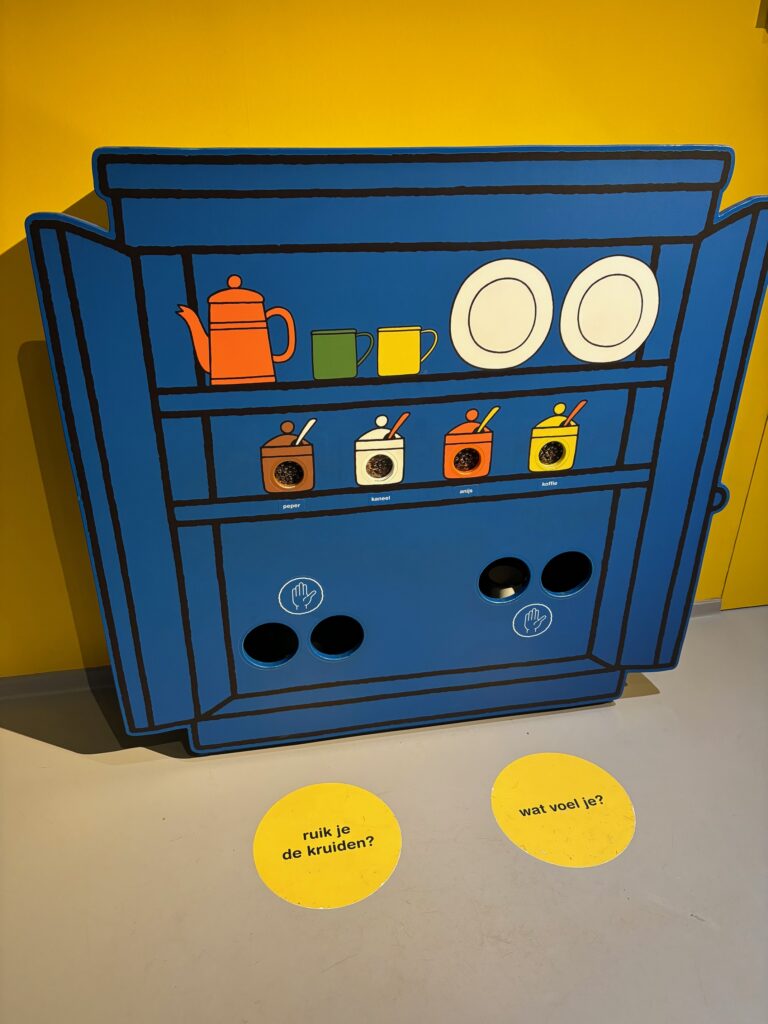
Olfactory installation at the Miffy Museum in Utrecht, Netherlands.
Why Olfactory Storytelling Requires a Different Kind of Design Thinking
Scent behaves differently from other interpretive mediums. It is fleeting, dispersing, fading out, and moving through space in ways that can be difficult to control. We need to pay attention to the visitor agency ensuring scents remain in the spaces and contexts they are meant to .
This creates a set of challenges that are specific to olfactory projects that many museum professionals are not trained to navigate. Here, conservation is one of the most critical points. Scents must never pose a risk to artworks or objects, which means delivery methods need to be carefully selected and tested. Health and safety is another, particularly in post-COVID contexts where sensory experiences are often shared ones. And we always want visitors to be able to choose whether and how they engage with a scent, rather than having it forced on them.
Additionally, there are the institutional realities: budget, infrastructure, spatial constraints, and the specialist skills that designing and installing scent delivery systems requires. These may seem like significant hurdles, but with the right knowledge and methodology, they are quite manageable.
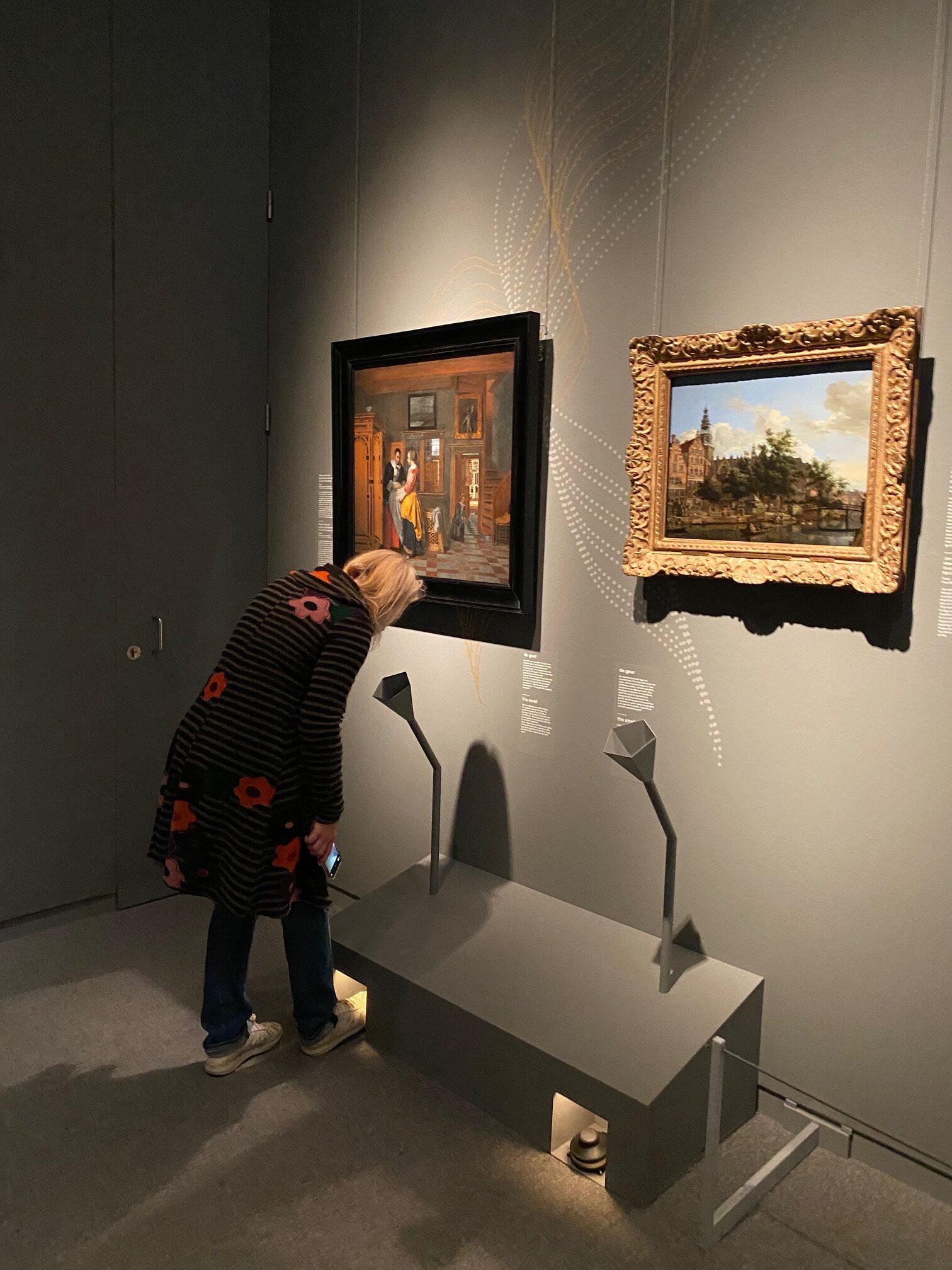
Sniffing at the Mauritshus Museum exhibition, Fleeting: Scents in Colour (2021).
A Framework for Getting It Right
Addressing these challenges requires a structured methodology that thinks through not just what the scent is, but how it will be experienced. This includes how visitors are warned and welcomed into a scented experience, how they are guided to engage with it, how the scent itself is physically presented, and how the interpretive context is communicated alongside it.
Each of these elements needs to be designed deliberately, in relation to the others and in relation to the broader interpretive goals of the exhibition.
This is the framework I teach and apply in my own practice. It is the foundation of responsible and effective olfactory storytelling in museum contexts.
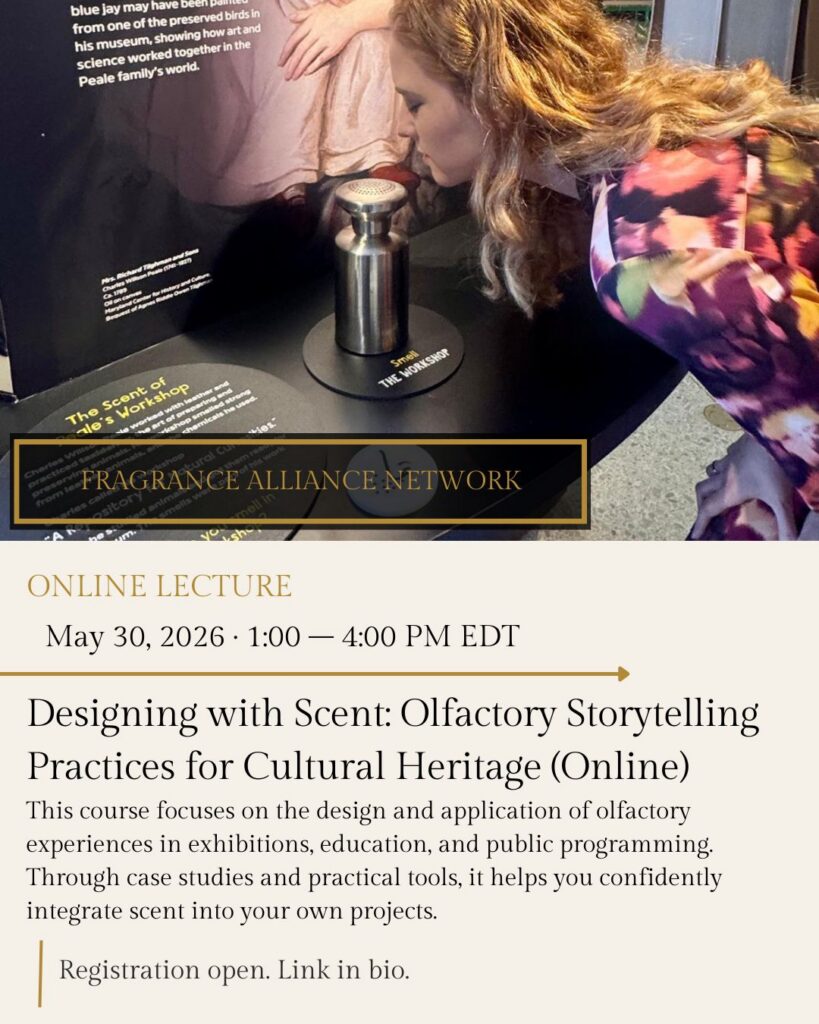
Olfactory distribution design and how to organize an olfactory storytelling project is covered in depth in my course Designing with Scent: Olfactory Storytelling Practices for Cultural Heritage (Online) hosted by the Fragrance Alliance Network. Details and registration link here.