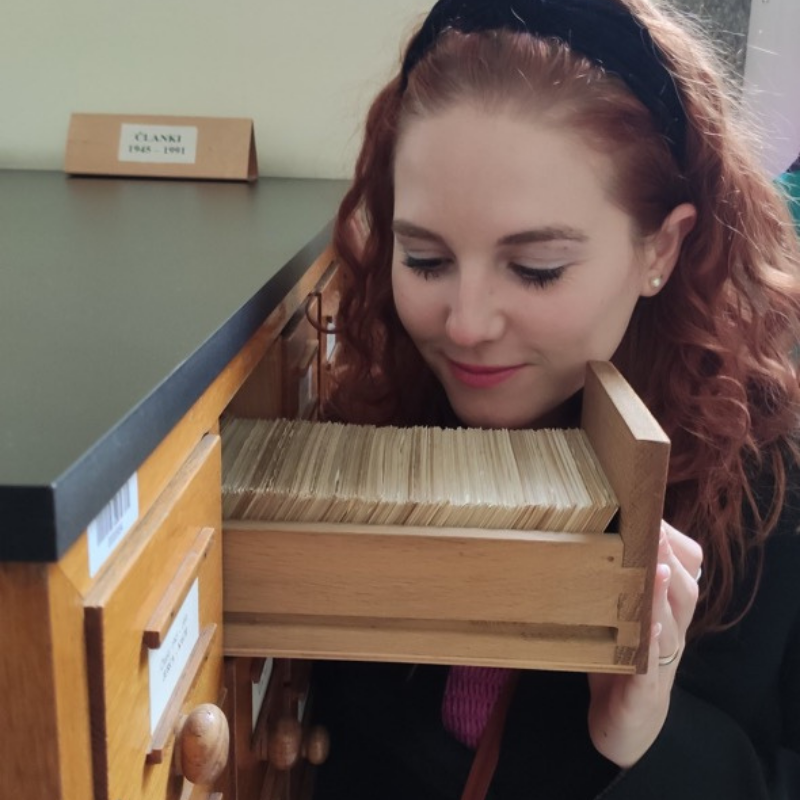

Looking at Art Through Scent No. 01 — Mary Magdalene and the Spikenard Jar
One of my favorite images.
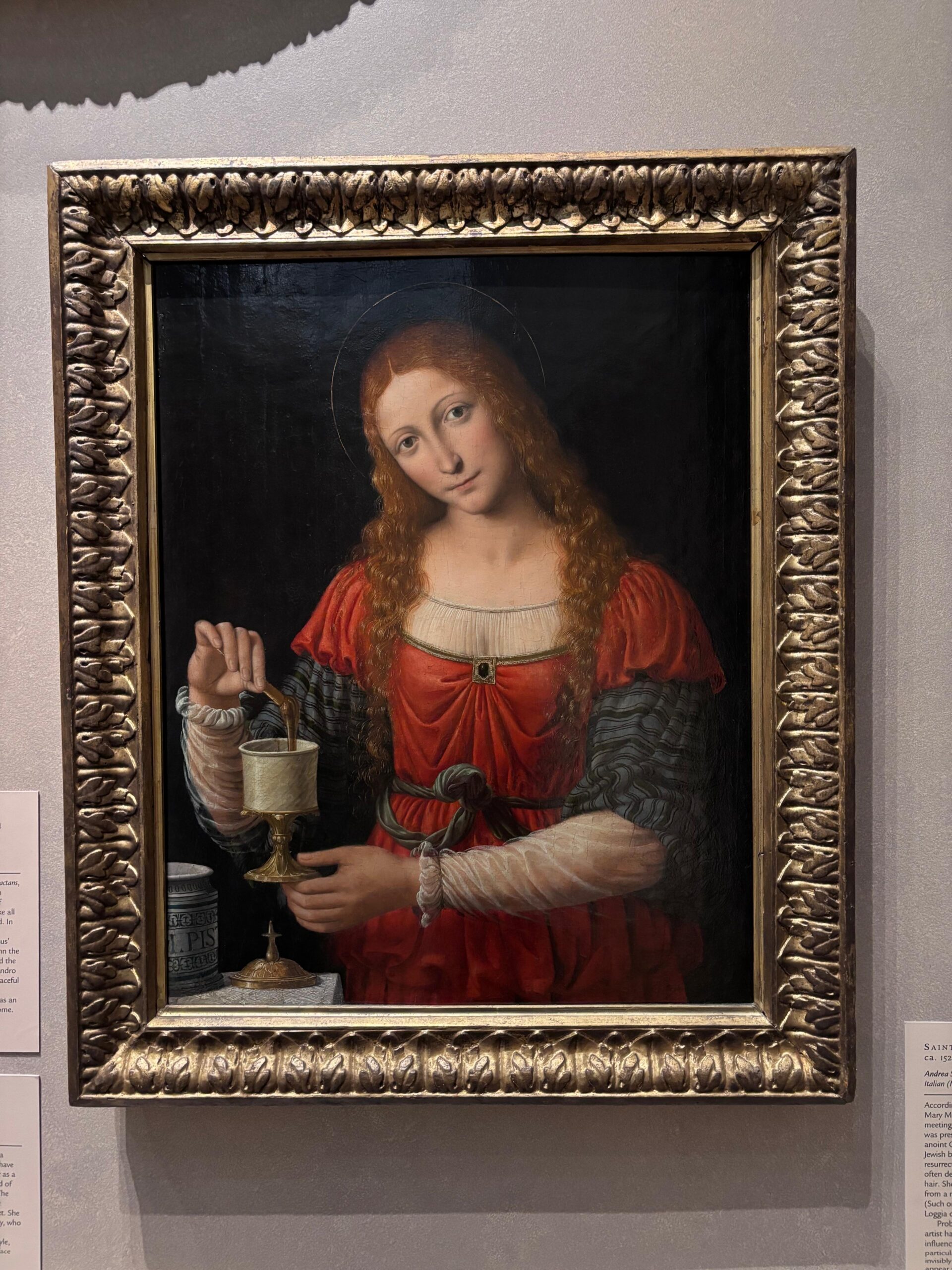
It shows a young woman with long hair, often dressed in red and grey, holding a gilded jar. She looks directly outward: composed and unhurried. At first glance, it reads as a straightforward devotional portrait. But look a little longer, and the jar in her hand starts to ask a different kind of question.
This is Mary Magdalene — one of the most depicted figures in Christian art history. And that jar is not just a symbol. It is an olfactory cue.
The Object in Her Hand
In Christian iconography, Mary Magdalene is almost always shown with a jar of ointment. It is her defining attribute and the object that identifies her across centuries of painting, sculpture, and illuminated manuscripts. Art historians have long understood what it signifies: devotion, repentance, the anointing of Christ.
But what that jar actually contained is something most museum didactics leave unexamined.
The ointment is spikenard oil. A rare, intensely fragrant substance derived from a Himalayan plant, mentioned several times in the Bible. In the ancient world, it was among the most costly aromatic materials available, imported over enormous distances and reserved for ritual use. To anoint with spikenard was not a casual gesture. It was an act of profound devotion, care, and transformation.
When you know this, the jar in her hand is no longer only a visual symbol. It becomes an olfactory one.
What Scent Adds to the Reading
Spikenard has been described as rich, earthy, and deeply resinous — something between musk and wet soil, with a sacred, almost medicinal quality. It is not a comfortable or pretty smell. It is powerful, persistent, and in your face.
Imagine that scent filling the space around this painting. The jar is no longer static. It becomes active with new meaning through smell, memory, and embodied knowledge of ritual practice.
This is what olfactory iconographies offer as an interpretive framework: a way of reading visual art through the sensory knowledge embedded in it. Not reconstructing the past exactly as it was — that is neither possible nor the point — but interpreting it more fully, through all the layers of meaning an artwork is designed to carry.
Find the Instagram post a made about this below:
Why This Matters for Museums
Most museum visitors stand in front of a painting like this for seconds and experience it visually. The label tells them who she is. The composition tells them she is important. But the olfactory dimension — the cultural knowledge embedded in that jar, the ritual significance of its contents, the sensory experience it was meant to evoke — remains invisible.
Scent, when used intentionally as an interpretive tool, can restore that layer of meaning. Not as an immersive gimmick, but as a considered, research-based intervention that helps visitors access what the artwork was actually communicating.
This is the work I explore and practice through The Olfactory Contractor.
Looking at Art Through Scent is a recurring series exploring how scent functions as a layer of meaning in visual art and cultural heritage. Each issue takes one artwork or object and reads it through an olfactory lens — connecting art history, sensory research, and museum interpretation.
If you found this useful, share it with someone who works in museums, heritage, or cultural education.