Behind the Brief: Mojave Desert Rain

by Sofia Collette Ehrich | Nov 24, 2026

Behind the Brief explores the stories, research, and creative decisions behind the scents developed for the Hi-Desert Nature Museum's exhibition, The Journey Is the Destination: 100 Years of Route 66.

Museum scents are often assumed to begin with fragrance. In reality, they begin with questions about place, meaning, and interpretation. Working together, perfumer Alie Kiral of Pearfat Parfum and I translated those questions into olfactory experiences designed to help visitors understand Route 66 in new ways.

This article explores Mojave Desert Rain and the challenge of interpreting a place through scent.
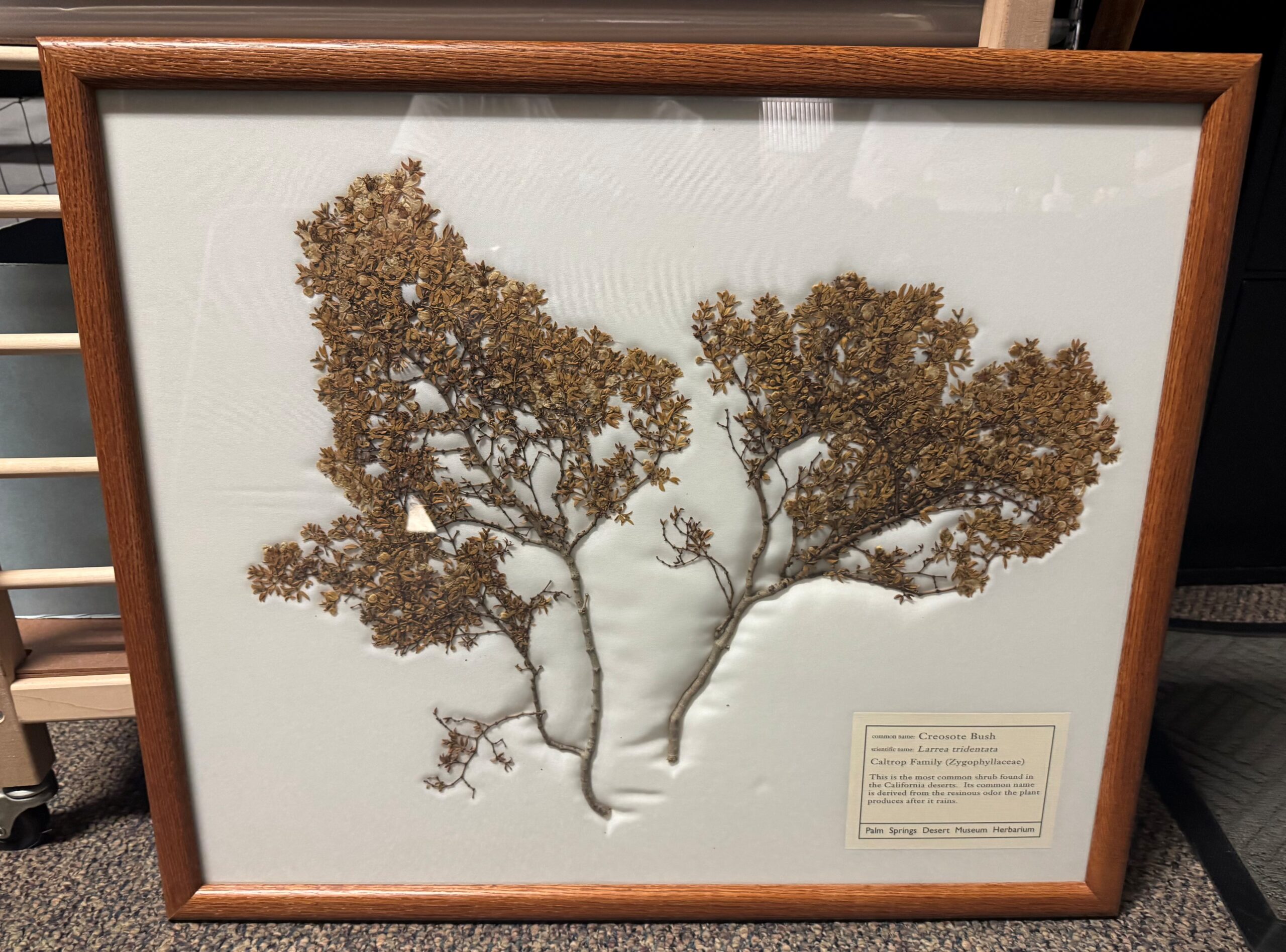
Creosote Herbarium Specimen.  Photo: Hi-Desert Nature Museum, Yucca Valley, CA.

The Goal Was Not Just to Recreate Rain
The goal was not to recreate rain. The goal was to recreate the Mojave after rain.
That distinction became one of the most important ideas behind Mojave Desert Rain, one of the six scents developed for The Journey Is the Destination: 100 Years of Route 66.
Rain has many recognizable olfactory qualities. Wet earth, moisture, minerals, plants, and changes in the atmosphere can all contribute to what people commonly describe as the smell of rain. But a rain fragrance could exist almost anywhere. To interpret the Mojave Desert, the scent needed to communicate a particular landscape and the plant life that gives rainfall there its distinctive sensory identity.
For many residents of the desert, that identity is connected to creosote.

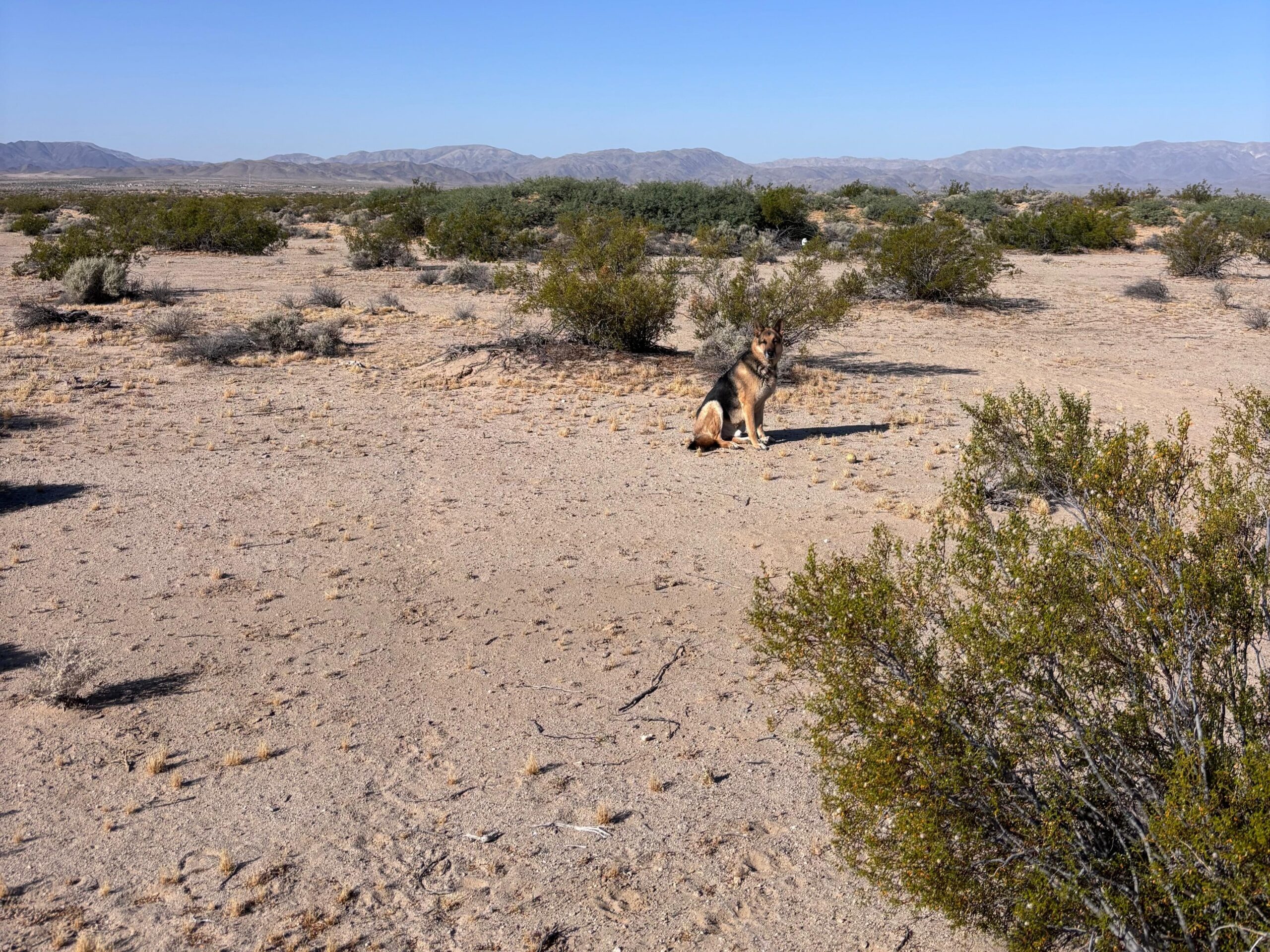
My dog amongst all the creosote on my property in Wonder Valley, California. May 2026. Photo: Sofia Collette Ehrich.

A Sensory Marker of Place

The creosote bush is an important part of the Mojave landscape. After rain, plant compounds released into the environment contribute to a powerful and immediately recognizable smell.
For people familiar with the region, the scent can signal changing weather, relief from prolonged dryness, seasonal transformation, and a deeply personal sense of place. It is not simply an interesting natural aroma. It forms part of how people recognize and understand the desert.
This made Mojave Desert Rain an especially meaningful subject for a Route 66 exhibition in Yucca Valley. Much of California’s Route 66 passes through desert environments, and the smell of rain offers a perspective on that landscape that a photograph cannot fully communicate.
The scent needed to help visitors encounter the Mojave as a living ecological environment rather than just an empty stretch of road.

Mojave Desert Rain smell station at The Hi-Desert Nature Museum. November 2026. Video: Sofia Collette Ehrich.

When the Perfumer Has Not Smelled the Place

During development, one practical challenge came up: Alie had not personally experienced the smell of creosote after rainfall in the Mojave.
Place-based smells are difficult to communicate solely through verbal descriptions, especially when those smells carry strong local associations. Words such as earthy, medicinal, resinous, fresh, or warm may all be relevant, but they are not equivalent to directly experiencing it.
We sent Alie some physical samples in the mail to help her recreate a scent she had not personally experienced yet. The museum team sourced and contributed botanical references, and creosote materials like the plant itself and a local hydrosol.
These references helped communicate not only what creosote smelled like, but how it functioned within the environment and why the smell mattered to people who knew it.

Building Rain, Then Building the Mojave

Geosmin played an important role in the fragrance. This exceptionally powerful aroma compound is often associated with wet earth and petrichor. Even in very small amounts, it can produce a recognizable impression of damp soil after rainfall. Geosmin helped establish rain, but it could not create the Mojave on its own.
The place-specific interpretation emerged only when that rain effect was connected to creosote references, botanical materials, descriptions of the landscape, and local knowledge. The final fragrance needed to communicate a relationship among water, soil, plants, climate, and human memory.
This is the difference between creating an atmospheric rain scent and interpreting the Mojave after rain. The first may evoke weather. The second carries cultural and environmental specificity.

Whose Knowledge Creates a Place?

Mojave Desert Rain demonstrates why olfactory interpretation is fundamentally collaborative. No single collaborator held every form of knowledge needed to create the scent. 
The museum understood the exhibition, location, audience, and Route 66 narrative. Local residents understood the sensory character of desert rainfall. Botanical references and plant materials provided evidence. Alie brought expertise in fragrance materials and composition. My role as the olfactory museologist was to connect those perspectives, maintain the interpretive purpose, and help evaluate whether the developing fragrance communicated the intended place. Together, we went through 3 rounds of feedback before landing the final scent.
The process also raises an important question about authority. When interpreting a sensory environment, whose experience defines it?

A laboratory material can suggest rain. A botanical sample can provide information about a plant. A perfumer can translate those elements into a coherent composition. But lived familiarity with a place provides another form of knowledge that should not be overlooked.
Responsible olfactory interpretation recognizes the value of each contribution rather than treating fragrance development as an isolated act. The collaborative effort of these projects ensures these checks and balances happen.

More Than the Smell of Weather

The finished Mojave Desert Rain fragrance does not claim to reproduce every experience of rainfall across the desert. No single composition could do that. It offers a researched and deliberately framed interpretation of an environmental experience connected to California’s Route 66 landscape.
The goal was not perfect replication. It was public understanding.
By smelling the fragrance, visitors could consider how climate and plant life shape the identity of a place, how local knowledge contributes to heritage interpretation, and how an apparently ordinary smell can become deeply meaningful to a community.

Written by Sofia Collette Ehrich

Sofia Collette Ehrich is an art historian, olfactory museologist, researcher, and podcast host. She is the founder of the Olfactory Contractor, a company that coaches and consults museum practitioners and others on the educational impact sensory storytelling has on the public.

Behind the Brief: Chicago Wild Onion

Behind the Brief: Chicago Wild Onion

Behind the Brief is an ongoing series exploring how the scents for The Journey Is the Destination: 100 Years of Route 66 at The Hi-Desert Nature Museum moved from research and interpretation to fragrance development. Working from interpretive briefs developed for the...

read more...
Behind the Brief: Roadside Refuel

Behind the Brief: Roadside Refuel

  Behind the Brief is an ongoing series exploring how the scents for The Journey Is the Destination: 100 Years of Route 66 at The Hi-Desert Nature Museum moved from research and interpretation to fragrance development. Working from interpretive briefs developed for...

read more...