When people hear that a perfumer created six scents for a Route 66 exhibition, they may reasonably assume that the project involved developing a collection of perfumes inspired by the road. That description is not entirely wrong, but it misses the purpose of the work.
For The Journey Is the Destination: 100 Years of Route 66 at the Hi-Desert Nature Museum, perfumer Alie Kiral of Pearfat Parfum and I were not creating six wearable perfumes. We were developing six olfactory interpretations designed to help visitors encounter particular aspects of Route 66’s history, landscapes, and cultural identity.
That distinction influenced the entire development process.
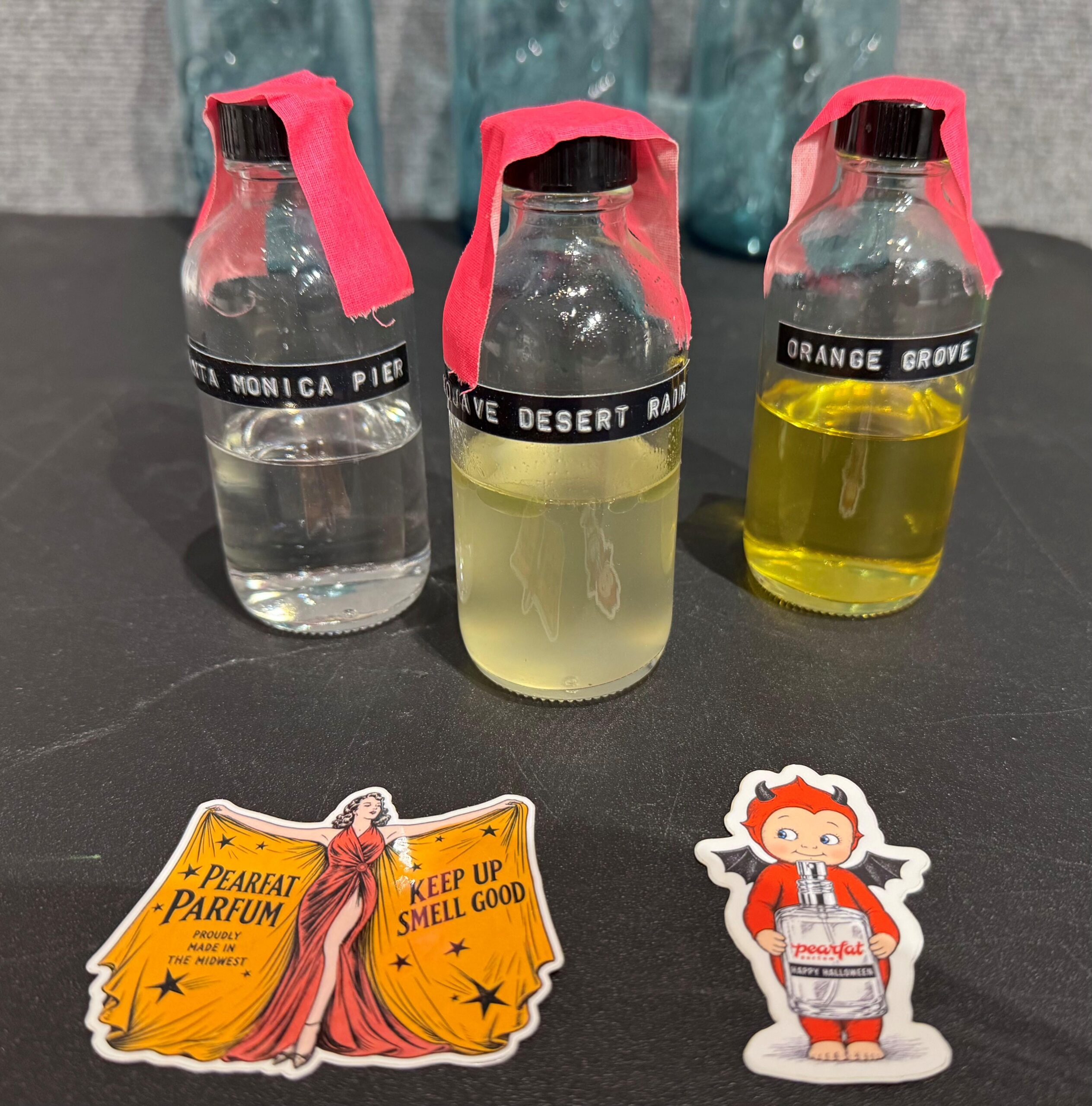
Bottles of scents from The Journey is the Destination: 100 Years of Route 66 provided by Pearfat Parfum. October 2026. Photo: Hi-Desert Nature Museum, Yucca Valley, CA.
Creating for the Skin and Creating for a Museum
Wearable fragrance is shaped by a particular set of aesthetic, technical, and regulatory considerations. A perfume must perform on the body, develop over time, and work as a coherent composition. It may be intended to express an emotion, create an identity, evoke a personal memory, or simply provide a beautiful sensory experience.
A museum scent has a different responsibility. It exists within an interpretive environment and must contribute to a larger story. Its development begins not with a list of desirable fragrance notes, but with questions about the exhibition:
-
- What is being interpreted?
- What evidence is available?
- Why is scent appropriate for this story?
- What should visitors understand after encountering it?
- How will the scent relate to the objects, photographs, labels, and themes around it?
For the Route 66 exhibition, the museum’s collection and curatorial narrative provided the starting point. I worked with the museum team to identify places, environments, industries, and cultural experiences in which scent could contribute something meaningful. Those ideas became interpretive concepts, which I translated into scent briefs for Alie.
My responsibility was to determine what each scent needed to communicate and how it supported the exhibition. Alie’s responsibility was to translate that direction into fragrance through material knowledge, experimentation, and composition. Our roles were distinct, but the project depended upon both.
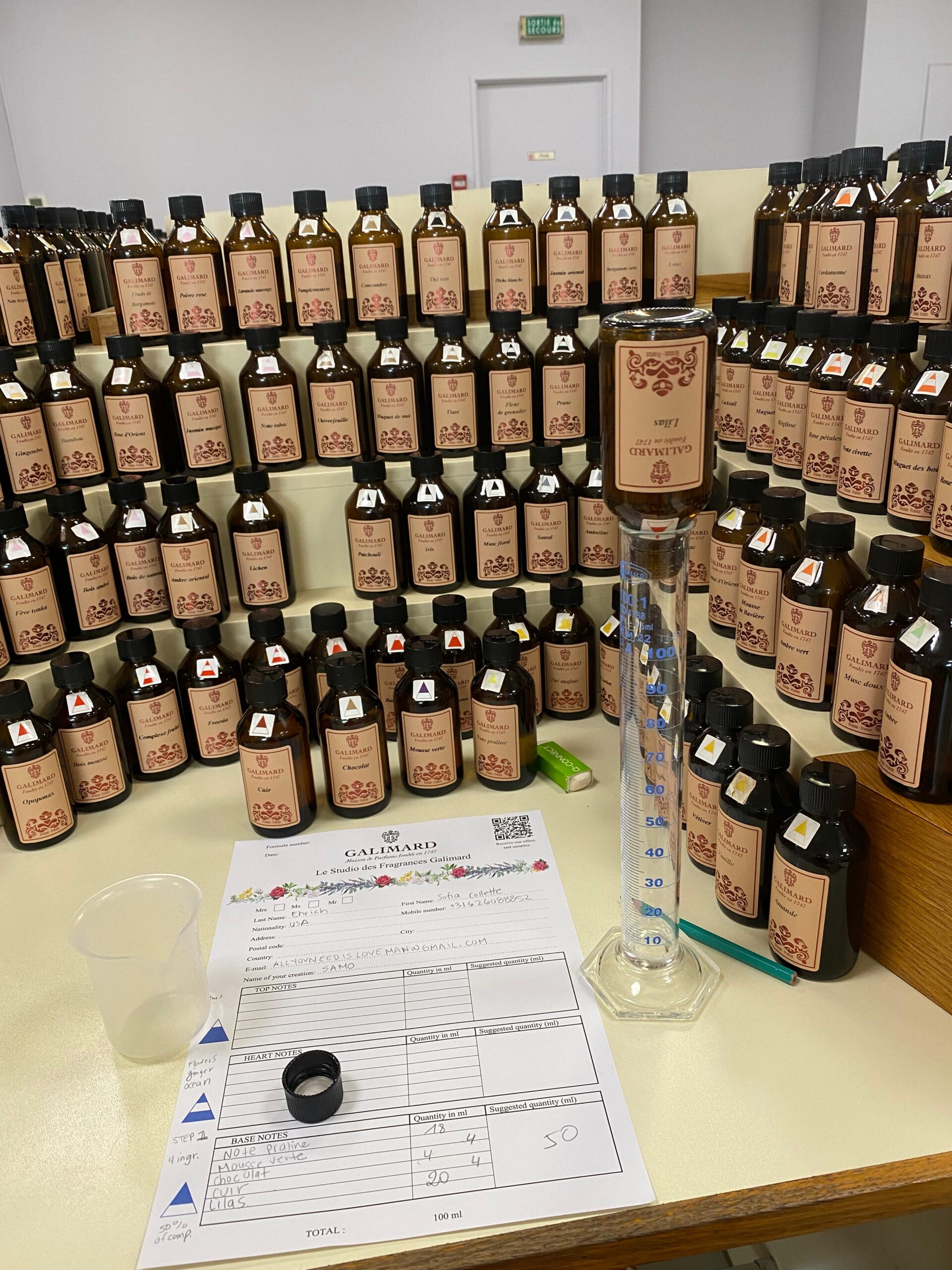
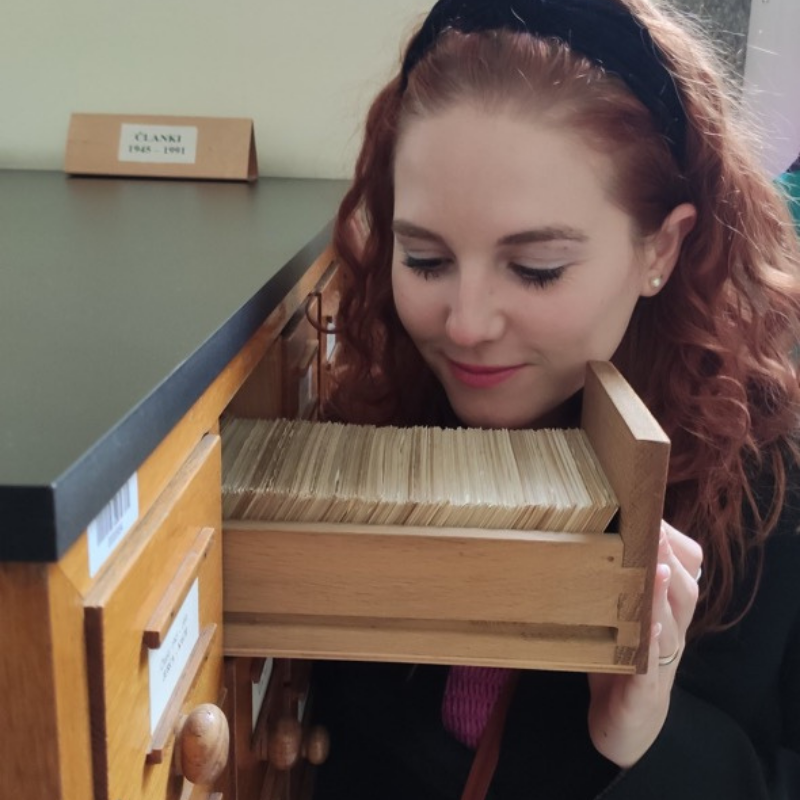
Perfume Making Workshop in Grasse, France. September 2023. Photo: Sofia Collette Ehrich.
Freedom Beyond Conventional Perfume Aesthetics
During our later conversation about the development process, Alie reflected on how different the assignment had been from creating a fragrance for Pearfat Parfum. Because the scents were presented through museum smell stations rather than worn directly on the skin, she could approach materials and effects differently.
The question was not always whether a fragrance was conventionally beautiful. The more important question was whether the fragrance communicated the intended environment or experience.
That opened the door to materials that might be too fishy, greasy, sulfurous, dusty, or decaying to feature prominently in a traditional wearable perfume. It also allowed familiar perfumery materials to perform unfamiliar jobs. A material associated with rose could help evoke automotive cleaning products. An indolic floral material could help suggest oranges decomposing beneath trees. Sulfurous materials could evoke fried potatoes, grease, or wild onions.
These materials were not included simply for shock or novelty. Each one served an interpretive purpose within a larger composition.
The Santa Monica Pier scent, for example, could not stop at a pleasant combination of sea air and sunscreen. The interpretation needed to encompass the pier as a complete environment: weathered surfaces, metal railings, marine life, saltwater, arcade machinery, tourism, and the sense of arrival at the western end of Route 66.
Similarly, California Orange could not simply smell like fresh citrus. The scent needed to evoke a working grove, including blossoms, leaves, soil, moisture, and fruit beginning to decay after falling to the ground. It was not an idealized orange. It was an agricultural landscape.
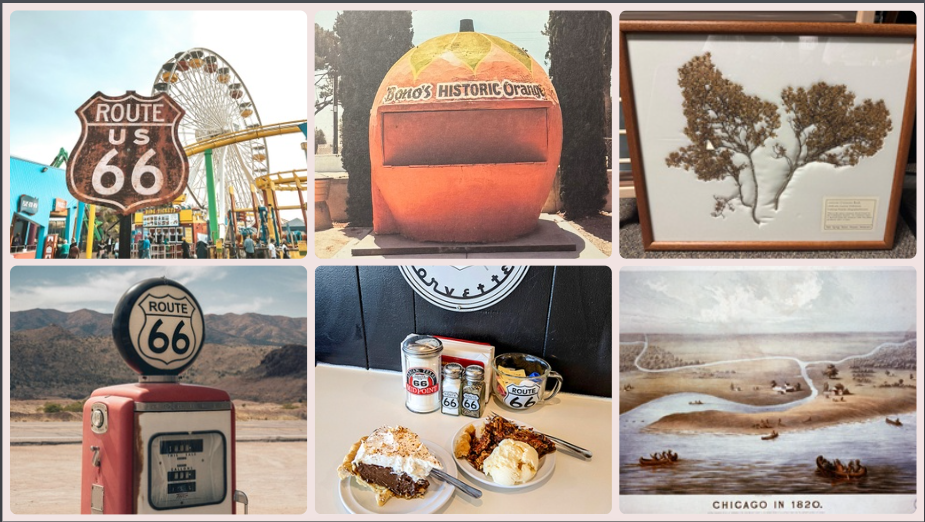
The six scent themes for the exhibition. November 2026. Photo: Sofia Collette Ehrich.
Six Scents, Six Interpretive Purposes
The six finished fragrances did not attempt to recreate Route 66 as a single smell. Such a smell could never adequately represent a road extending across thousands of miles, numerous landscapes, and many cultures and communities.
Instead, each fragrance offered a focused way into the road’s history.
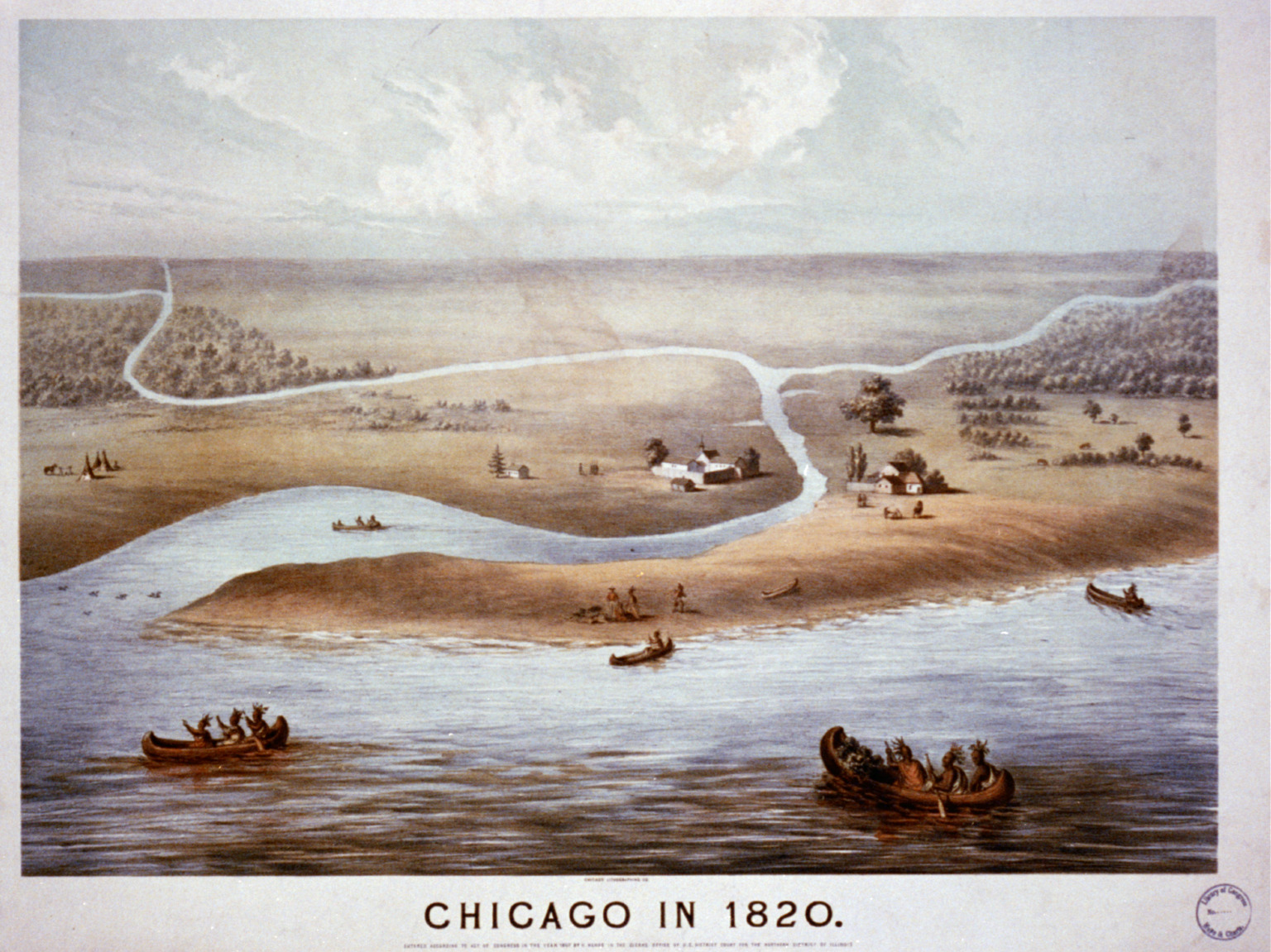
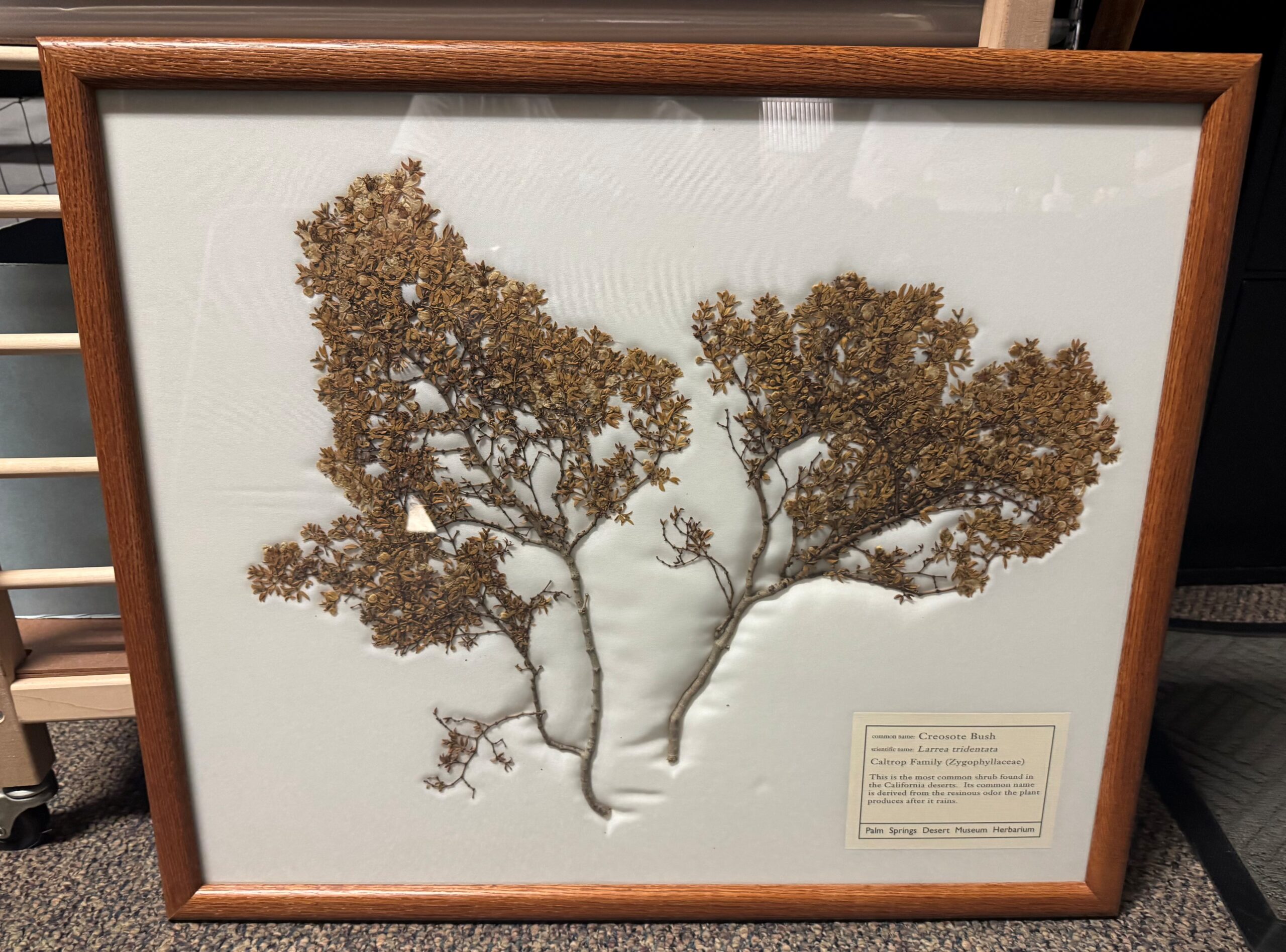
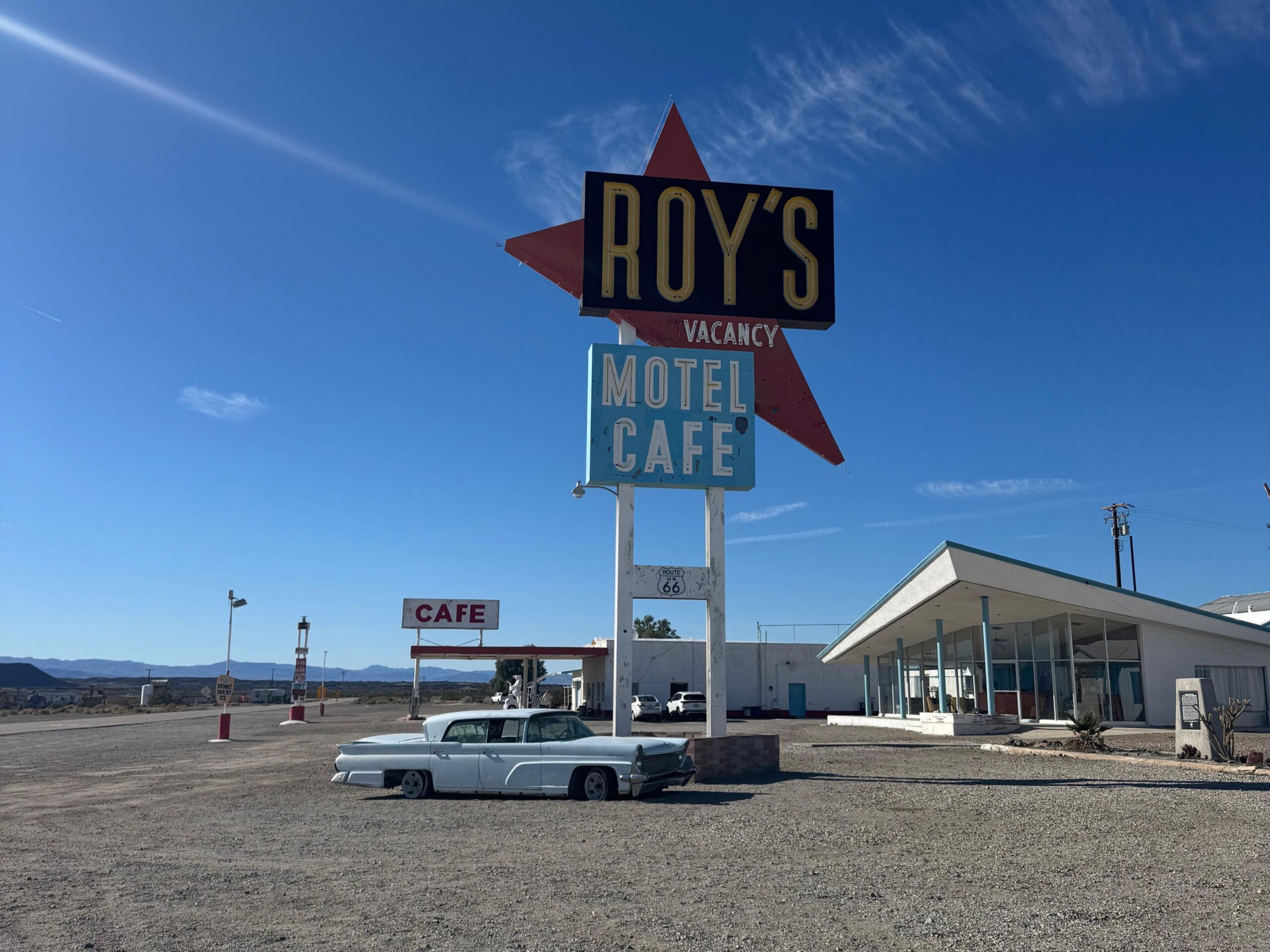
Roadside Refuel explored the service stations, maintenance products, labor, and infrastructure that kept travelers moving. Mojave Desert Rain interpreted the relationship among rainfall, creosote, local environmental knowledge, and the sensory identity of the desert. Chicago Wild Onion looked beyond Route 66’s eastern terminus to the Indigenous language and plant landscape embedded in Chicago’s name.
Together, the scents encouraged visitors to understand Route 66 not only as a highway represented through cars, signs, photographs, and architecture, but as a cultural landscape experienced through the body and senses.
Going Behind the Brief with Pearfat Parfum
This article begins a four-part Behind the Brief series about the development of the Route 66 scents. The next three posts will examine individual fragrances and some of the surprising decisions behind them.
We will look at why a material commonly associated with roses helped build a gas station, why reproducing rain was not enough to interpret the Mojave Desert, and how a sulfurous fragrance material helped reveal Indigenous language and ecological history within the name Chicago.
These stories demonstrate why a museum fragrance is not simply a perfume placed inside an exhibition. It is the result of research, interpretation, creative development, testing, and collaboration.
We were not creating six perfumes inspired by Route 66. We were creating six interpretations of its places, histories, and cultural meanings.